
In the dietary supplement industry, a brilliant formula on paper is entirely useless if it cannot be scaled, stabilized, and produced in compliance with strict regulatory standards. From our experience, many new brand owners drastically underestimate the complexities involved in the production of health products. They assume the process is merely a matter of mixing basic powders in a commercial vat and pressing them into pills. This dangerous misconception inevitably leads to devastating product recalls, FDA warning letters, and destroyed brand reputations.
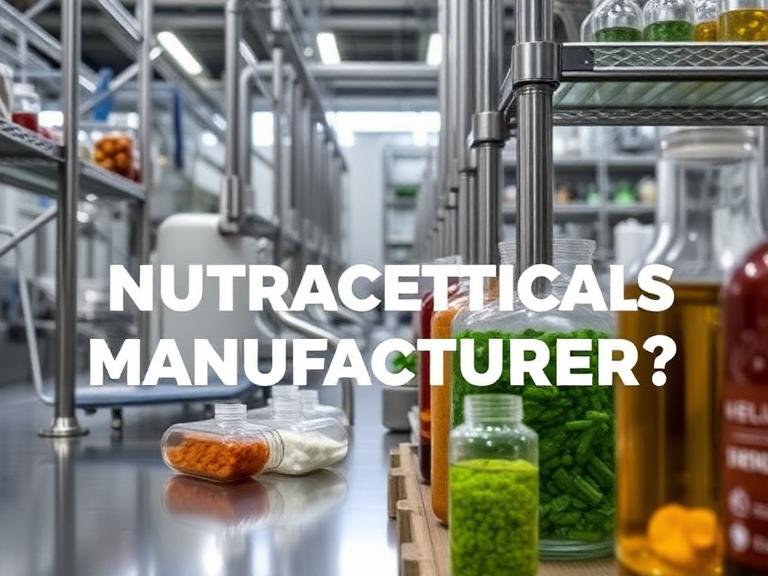
If you are entering the health, wellness, and sports nutrition sector, you must understand the rigorous, science-backed industrial processes required to bring a supplement to market safely. In this comprehensive guide, we strip away the marketing fluff and detail the exact manufacturing steps, quality control protocols, and commercial realities you must navigate to succeed. Understanding how nutraceuticals manufactured correctly perform in the market is the key to building a profitable, long-lasting brand.
Quick Answer: How Are Nutraceuticals Manufactured?
The nutraceutical manufacturing process is a highly regulated, multi-stage industrial operation. It begins with raw material sourcing and rigorous identity testing to verify purity. The materials undergo precision blending to ensure exact homogeneity. This bulk material is then processed into its final delivery format—such as hard-shell capsules, compressed tablets, loose powders, or softgels—using high-speed, specialized machinery. Finally, the finished product undergoes strict microbiological and analytical quality control testing to ensure potency and compliance with FDA 21 CFR Part 111 cGMP standards before being securely packaged, sealed, and released for consumer sale.
ENZ Pharmtech Dietary Supplement Manufacturer offer One-Stop Solution Service for Private Label Manufacturing. With the excellent equipment, facilities, production lines, processes, mature formulations, professional team, and decades of years experience. Qualified in health supplements fields and certified by ISO (FSSC22000), HACCP, GMP, BRCS, FDA, HALAL, etc.
Table of Contents
- 1. What Is Nutraceutical Manufacturing?
- 2. How It Works: The 6-Step Manufacturing Process
- 3. Benefits of Professional Manufacturing
- 4. Limitations and Realities
- 5. Who Should Use It vs. Who Does Not Need It
- 6. Common Mistakes in the Industry
- 7. Quick Summary Table
- 8. Comparison Table: Production Models
- 9. Pros and Cons of Contract Manufacturing
- 10. Commercial Buying Guide
- 11. Expert Recommendation
- 12. Frequently Asked Questions (FAQ)
- 13. Authoritative References
1. What Is Nutraceutical Manufacturing?
Nutraceutical manufacturing is the industrial scale-up, stabilization, and commercial production of dietary supplements, functional foods, and medicinal nutrition products. In most professional situations, this involves transitioning a small bench-top prototype or theoretical recipe into a mass-produced consumer good without losing the integrity, potency, or bioavailability of the delicate active ingredients.
It is fundamentally an engineering and biochemical discipline governed by strict legal frameworks. To have high-quality nutraceuticals manufactured legally, a facility must utilize sophisticated HVAC systems for strict humidity control, high-shear blenders, pharmaceutical-grade tablet presses, and advanced High-Performance Liquid Chromatography (HPLC) testing equipment. A true manufacturing partner does not just put powder in a bottle; they engineer a delivery system that survives transportation, extreme temperatures, and a two-year shelf life without degrading.
2. How It Works: The 6-Step Manufacturing Process
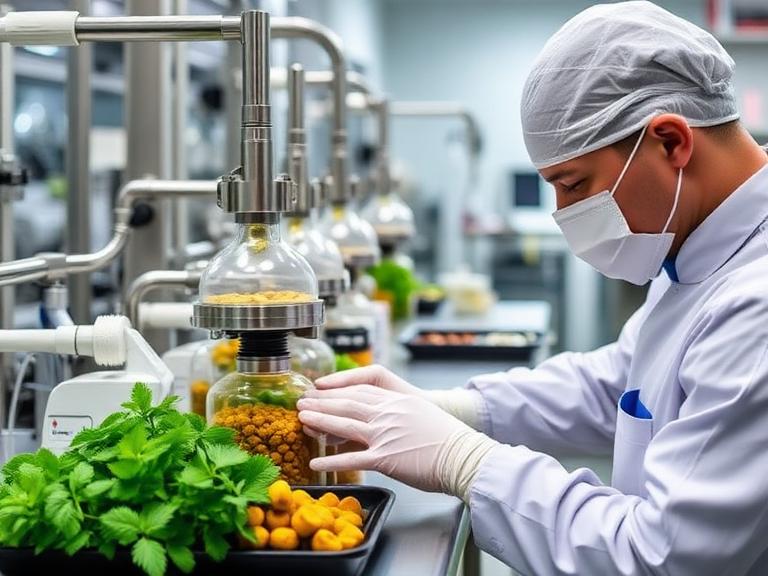
Understanding the exact steps of production separates serious commercial brands from amateur ventures. Here is the step-by-step breakdown of how premium nutraceuticals manufactured today move from concept to finished product.
Step 1: Formulation and Feasibility Engineering
Before a single machine is turned on, food scientists and chemists must optimize the formula. Raw active ingredients rarely flow well through high-speed machinery on their own. Formulators must carefully select excipients, such as magnesium stearate or rice hulls, to act as flow agents and lubricants. They must also calculate the exact bulk density of the ingredients to ensure the prescribed dosage actually fits into the target capsule size (e.g., Size 0 or Size 00).
Step 2: Sourcing, Quarantine, and Identity Testing
When raw materials arrive at the manufacturing facility, they are immediately placed into quarantine. Under cGMP regulations, no ingredient can enter the production floor without passing rigorous analytical testing. Facilities utilize Fourier Transform Infrared Spectroscopy (FTIR) or HPLC to verify that the ingredient matches its Certificate of Analysis (CoA). The raw materials are also screened for heavy metals (lead, arsenic, mercury, cadmium) and microbial contaminants (E. coli, Salmonella, mold).
Step 3: Precision Granulation and Blending
Once approved, the raw ingredients are weighed in cleanrooms and transferred to industrial blenders (such as V-blenders or ribbon blenders). Blending is a critical science; if the mix is not perfectly homogenous, one capsule might contain a toxic dose of an active ingredient, while another contains none. In our testing, achieving a uniform blend often requires multiple stages of sifting and particle size reduction (milling) before the final mixing phase.
Step 4: Forming the Delivery System
The blended bulk material is then processed into its final consumer format. Depending on the product, the blend is routed to different machinery:
- Encapsulation: High-speed encapsulation machines can fill thousands of gelatin or HPMC (vegetarian) hard-shell capsules per minute, constantly monitoring weight variations.
- Tableting: Heavy-duty rotary tablet presses compress the powder into solid pills using thousands of pounds of pressure, followed by an optional aqueous coating to mask bitter tastes.
- Liquids & Gummies: For alternative delivery methods, specialized cooking, cooling, and depositing lines are required. If you are looking to produce modern formats like creatine gummies for women, the manufacturing process shifts from dry blending to complex pectin or gelatin hydrocolloid chemistry. Similarly, specialized liquid supplement manufacturers utilize pasteurization and homogenization tanks to ensure shelf-stability without excessive preservatives.
Step 5: Quality Assurance and Post-Production Testing
Before any product is packaged, a statistical sample of the finished batch is sent to the quality control laboratory. Technicians perform disintegration and dissolution testing to ensure the tablet or capsule will actually break down in the human digestive tract. They also perform final assays to guarantee that the label claims match the actual potency of the product.
Step 6: Packaging, Labeling, and Release
The approved bulk product moves to the packaging line. Bottles (typically HDPE or PET plastic, or glass) are filled via automated counting machines. Critical components like desiccants (to absorb moisture) and induction seals (to provide tamper evidence and preserve freshness) are inserted. Finally, labels printed with compliant supplement facts panels are applied, and the product is boxed, palletized, and released for distribution.
3. Benefits of Professional Manufacturing
Utilizing a world-class, certified manufacturing facility provides immense commercial advantages. Primarily, it guarantees brand protection. When you work with elite GMP certified supplement companies, you are insulated from FDA audits, catastrophic product recalls, and consumer lawsuits resulting from contaminated products.
Furthermore, professional manufacturing ensures batch-to-batch consistency. Your customers will experience the same efficacy, taste, and appearance every time they order. In the highly competitive sports nutrition sector, working with top-tier sports supplement manufacturers Europe ensures your performance products dissolve instantly and taste exceptional, driving repeat B2C subscriptions.
4. Limitations and Realities
We must be transparent about the limitations of contract manufacturing. The primary barrier to entry is Minimum Order Quantities (MOQs). High-speed machinery requires substantial setup time and material loss during calibration; therefore, reputable manufacturers rarely accept orders below 1,000 to 5,000 bottles per SKU.
Additionally, lead times can be extensive. From initial formulation to final delivery, the process typically takes 8 to 12 weeks. Supply chain disruptions regarding rare botanical extracts can extend this further. Brands must carry adequate inventory to avoid stockouts during these lengthy production cycles.
5. Who Should Use It vs. Who Does Not Need It
Who should use professional contract manufacturing: Commercial brand owners, clinical practitioners, large gym franchises, and e-commerce entrepreneurs aiming to build a scalable, legally compliant business. If you are selling to the public, you absolutely must use a licensed facility.
Who does not need it: Hobbyists experimenting for personal use. For beginners who simply want to test a unique herbal blend for themselves or their immediate family without commercial intent, paying for a 5,000-bottle production run is entirely unnecessary. In those scenarios, purchasing raw ingredients and a manual 100-hole capsule filling tray for home use is sufficient.
6. Common Mistakes in the Industry
From our experience consulting with hundreds of wellness brands, we see the same fatal errors repeated continuously:
- Selecting based purely on price: Choosing the cheapest facility often means they are skipping mandatory identity testing or using substandard, unstandardized raw ingredients.
- Over-formulating: Brands often try to cram 20 different active ingredients into a single capsule for marketing purposes. This results in “pixie-dusting”—where the amounts are so small they offer no clinical benefit—and creates massive blending and flow issues on the machinery.
- Ignoring regional compliance: A product legally manufactured in the USA might contain ingredients banned by the EFSA. If you are targeting the European market, you must partner with private label supplements Europe experts who understand local novel food regulations.
7. Quick Summary Table: Nutraceutical Manufacturing
| Manufacturing Phase | Primary Objective | Critical Equipment Used |
|---|---|---|
| Raw Material Sourcing | Verify purity, identity, and safety | HPLC, FTIR Spectrometers |
| Blending | Achieve 100% active ingredient homogeneity | V-Blenders, Ribbon Mixers |
| Encapsulation / Tableting | Convert powder to precise dosage formats | Rotary Presses, Automated Encapsulators |
| Quality Control (QC) | Confirm potency and disintegration | Dissolution testers, Microbial incubators |
| Packaging | Ensure shelf-stability and compliance | Induction sealers, Automated Labelers |
8. Comparison Table: Production Models
When determining how to bring your product to life, you generally have three commercial avenues. Here is how they compare:
| Feature | White Label (Stock Formulas) | Custom Contract Manufacturing (CMO) | In-House Facility Build |
|---|---|---|---|
| Speed to Market | Very Fast (2-4 weeks) | Moderate (8-12 weeks) | Very Slow (12-24 months) |
| Formula Ownership | Owned by Manufacturer | Owned by Your Brand | Owned by Your Brand |
| Capital Required | Low ($2k – $5k) | Medium ($10k – $50k) | Extremely High ($2M+) |
| Best For… | Startups testing the market | Scaling brands wanting unique USP | Massive global conglomerates |
9. Pros and Cons of Contract Manufacturing
| Pros of Using a Professional CMO | Cons of Using a Professional CMO |
|---|---|
| Zero capital expenditure on heavy machinery or facility leases. | You are subject to the manufacturer’s production schedule and lead times. |
| Immediate compliance with strict FDA and cGMP regulatory standards. | Requires meeting Minimum Order Quantities (MOQs) which ties up cash flow. |
| Access to a team of dedicated food scientists and flavor chemists. | Communication delays if dealing with poor account managers. |
| Scalability—easily jump from 5,000 units to 500,000 units a month. | Risk of intellectual property theft if NDA agreements are not solid. |
10. Commercial Buying Guide: Selecting a Partner
If you are ready to contact supplement manufacturer representatives, do not simply ask for a price quote. Use this buying guide matrix to evaluate their true capabilities.
| Evaluation Criteria | What to Look For | Why It Matters for Commercial Users |
|---|---|---|
| Certifications | cGMP, ISO 22000, FDA Registered, NSF | Without these, your products are a legal liability. E-commerce platforms like Amazon increasingly require NSF or cGMP proof. |
| In-House Testing | On-site analytical and microbial labs | Facilities that outsource all testing take significantly longer to release finished goods, crippling your inventory turnover. |
| Sourcing Network | Global ingredient relationships | If you need a specific whey isolate, partnering with top protein powder manufacturers Australia guarantees access to premium dairy inputs. |
| Facility Specialization | Dedicated lines for allergens vs. non-allergens | For heavy-duty applications or vegan claims, cross-contamination with dairy or gluten can ruin your brand reputation. |
11. Expert Recommendation
In most professional situations, attempting to manufacture dietary supplements in-house without millions of dollars in capital and a team of compliance lawyers is a guaranteed path to failure. We recommend that commercial brands focus entirely on marketing, customer acquisition, and distribution, while leaving the complex science of production to certified experts.
Partnering with a comprehensive provider like ENZ Pharmtech ensures that your products are not only effective and safe but fully compliant with the global regulatory landscape. Do not compromise your brand’s future by cutting corners on manufacturing.
12. Frequently Asked Questions (FAQ)
Are nutraceuticals regulated by the FDA?
Yes, in the United States, nutraceuticals and dietary supplements are regulated by the FDA under the Dietary Supplement Health and Education Act (DSHEA) of 1994, and must be manufactured in accordance with 21 CFR Part 111 cGMP regulations.
What is the most common form of nutraceutical manufactured?
Hard-shell capsules (both gelatin and vegetarian HPMC) remain the most common and cost-effective delivery format due to their stability, ease of swallowing, and rapid manufacturing speeds. However, gummies and liquid formats are experiencing the fastest market growth.
How long does it take to manufacture a batch of supplements?
For a custom formula, the process typically takes 8 to 12 weeks. This includes the time required to source raw materials, conduct quarantine testing, blend, encapsulate, perform final quality control assays, and complete packaging.
What are excipients and why are they used?
Excipients are inactive ingredients, such as silicon dioxide or magnesium stearate, added to a supplement formula. They are absolutely necessary in commercial manufacturing to prevent powders from clumping, ensure even blending, and allow the material to flow smoothly through high-speed machinery without jamming.
13. Authoritative References
To further understand the regulatory and scientific standards behind how nutraceuticals are manufactured, please consult the following authoritative organizations:
- U.S. Food & Drug Administration (FDA) – Official documentation for 21 CFR Part 111: Current Good Manufacturing Practice in Manufacturing, Packaging, Labeling, or Holding Operations for Dietary Supplements.
- National Institutes of Health (NIH) – Office of Dietary Supplements – Federal guidelines, fact sheets, and scientific research regarding the efficacy and safety of dietary supplement ingredients.
- NSF International – The leading global independent public health and safety organization providing third-party GMP certification and banned substance testing for the nutraceutical industry.