
The dietary supplement industry is ruthlessly competitive. Every year, thousands of aspiring entrepreneurs launch new wellness brands, only to discover their profit margins have been entirely consumed by hidden manufacturing fees and logistical oversights. We witness procurement managers and founders constantly making the catastrophic mistake of choosing a manufacturing partner based solely on the lowest initial quote per bottle. This amateur approach guarantees substandard ingredient sourcing, failed regulatory audits, and ultimately, brand destruction.
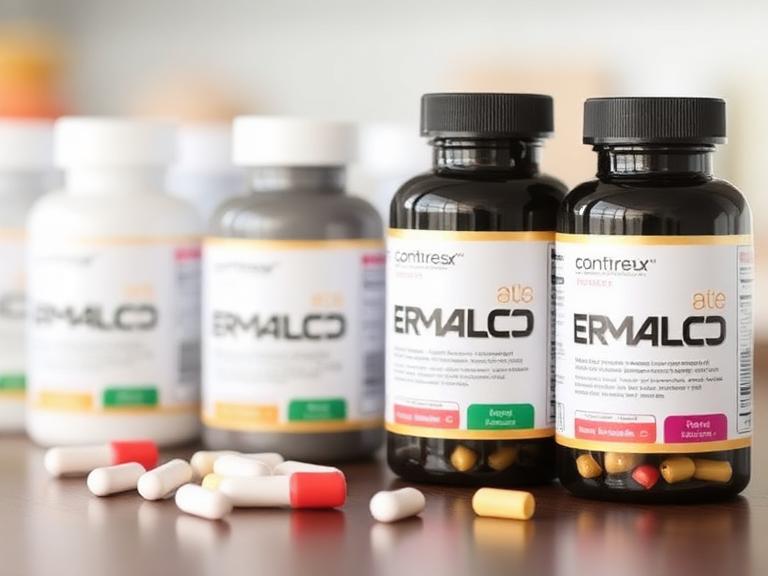
From our experience engineering and scaling commercial nutraceuticals at ENZ Pharmtech, treating supplement production as a simple commodity transaction is a profound error. A supplement is an ingestible health product; its unit economics are dictated by rigorous science and strict compliance. If you want to build a brand that commands retail shelf space and premium pricing, you must master the exact Factors That Affect Private Label Supplement Costs. In this definitive guide, we will brutally dissect the supply chain, explain the hidden variables that dictate your bottom line, and provide the commercial judgment required to protect your capital while delivering an elite product to your consumers.
Quick Answer: The Cost Drivers You Must Know
The 9 core Factors That Affect Private Label Supplement Costs include: 1) Ingredient Quality (patented vs. generic raw materials), 2) Delivery Format (powders and capsules are cheap; gummies and softgels are expensive), 3) Minimum Order Quantities (MOQs), 4) Custom vs. Stock Formulations, 5) Packaging and Labeling Complexity, 6) Flavoring and Sweetening Systems, 7) Third-Party Testing and Assay Verification, 8) Regulatory Certifications (GMP, Halal, FDA compliance), and 9) Freight and Logistics. To maximize margins without sacrificing quality, we recommend utilizing proven stock formulations to bypass custom R&D fees, while investing heavily in third-party testing to guarantee consumer safety.
Table of Contents
- What is Private Label Supplement Manufacturing?
- How It Works: The 9 Core Cost Factors
- Commercial Benefits of Understanding Costs
- Limitations of Budget Manufacturing
- Who Should Use Stock vs. Custom Formulations
- Common Procurement Mistakes
- Strategic Buying Considerations
- Essential Comparison Tables
- Expert Recommendation from ENZ Pharmtech
- Frequently Asked Questions (FAQ)
What is Private Label Supplement Manufacturing?
Private label manufacturing allows a brand owner to place their logo and branding on a dietary supplement produced by a third-party contract manufacturer. Instead of investing millions of dollars in mixing equipment, cleanrooms, and ISO-certified facilities, you leverage the infrastructure of an established factory.
However, calculating the precise Factors That Affect Private Label Supplement Costs requires understanding that you are paying for more than just raw powder in a plastic tub. You are paying for the blending time, the encapsulation machine wear-and-tear, the stability testing, the compliance documentation, and the skilled labor required to pass strict regulatory audits. A premium vitamin manufacturers USA facility will inherently charge more than an uncertified overseas broker, but the resulting quality prevents your brand from being pulled off the market due to contamination.
How It Works: The 9 Core Cost Factors
In most professional situations, your final price per unit is a complex mathematical equation based on the following nine variables.
1. Ingredient Sourcing and Purity
The raw materials are the foundation of your cost. Utilizing generic ascorbic acid is incredibly cheap. Utilizing a patented, trademarked, liposomal Vitamin C with clinical trials backing its absorption rate will multiply your raw material cost exponentially. You must decide if your target demographic is willing to pay a premium for branded ingredients.
2. The Delivery Format
How the supplement is ingested drastically alters production time. Simple two-piece gelatin capsules or bulk powders are highly efficient and cost-effective. Conversely, producing gummies requires cooking, pectin/gelatin molding, and extensive drying times to prevent melting in transit. Working with a dedicated gummy vitamins manufacturer involves higher baseline costs due to the complex manufacturing environment required.
3. Minimum Order Quantities (MOQ)
Manufacturing runs on economies of scale. If a factory must halt production to clean the blending vats and calibrate the encapsulation machines for your specific formula, those labor costs are fixed. If you order 10,000 bottles, that setup fee is absorbed easily. If you demand 500 bottles, the setup fee destroys your per-bottle margin. While searching for private label supplements no minimum order sounds appealing for beginners, it is often a mathematical illusion offset by exorbitant unit pricing.
4. Custom Formulation vs. Stock Formulas
Using a “white label” or stock formula that the manufacturer already produces in mass quantities requires zero R&D. If you want to tweak the formula—adding a specific botanical extract or altering the amino acid profile—you must pay the manufacturer’s chemistry team to conduct stability and flowability tests. Customization commands a premium.
5. Flavoring, Masking, and Sweetening Systems
If you are developing a pre-workout or protein powder, the raw ingredients often taste terribly bitter or metallic. Achieving a highly palatable flavor profile using natural sweeteners (like Stevia or Monk Fruit) and natural masking agents requires extensive organoleptic testing. This R&D time is one of the primary Factors That Affect Private Label Supplement Costs when dealing with drinkable white label supplement products.
6. Packaging and Labeling Sophistication
A standard white HDPE packer bottle with a basic gloss label is the industry default. If you upgrade to amber glass bottles, custom-molded PET shapes, metallic foil stamping, or soft-touch matte finishes, your packaging costs can quickly exceed the cost of the actual supplement inside the bottle.
7. Third-Party Testing and Certifications
You cannot legally or ethically sell supplements without verifying identity, purity, strength, and composition. Routine testing for microbiological contaminants, heavy metals, and active ingredient assays adds fixed costs to every batch. Premium manufacturers absorb some of this into their overhead, while discount brokers will pass the independent lab fees entirely onto you.
8. Facility Compliance Standards
A facility operating with FDA registration, cGMP compliance, ISO standards, and Halal/Kosher certifications requires massive capital to maintain those credentials. You pay a slight premium to partner with these facilities, but it is the ultimate insurance policy against catastrophic recalls.
9. Shipping, Logistics, and Freight
Heavy items crush profit margins. When evaluating the protein powder price 2025 market, you must factor in the LTL (Less Than Truckload) freight costs. Shipping 5,000 heavy tubs of whey protein across the country will cost exponentially more than shipping 5,000 lightweight bottles of capsules.
Commercial Benefits of Understanding Costs
The primary benefit of mastering these nine variables is total margin control. By understanding exactly where your money goes, you can value-engineer your product. For example, if you know that custom flavoring drives up the cost of a pre-workout, you can partner with private label pre workout manufacturers who offer pre-formulated, taste-tested stock options, instantly saving you thousands in R&D while allowing you to go to market 60 days faster.
Limitations of Budget Manufacturing
We must apply ruthless commercial judgment: if you aggressively squeeze your manufacturer on price, they will squeeze the quality of your product. The limitation of hunting strictly for the lowest Factors That Affect Private Label Supplement Costs is that you end up with “fairy dusting.” This is the unethical practice where a manufacturer includes a premium ingredient in the formula at such a microscopic, clinically irrelevant dose that it has no biological effect, simply so you can list it on the label. This destroys brand trust permanently.
Who Should Use Stock vs. Custom Formulations
For beginners and startups: If you are testing a new brand concept and lack massive capital, you must use stock formulations. Off-the-shelf, white-label products have already absorbed the R&D, stability testing, and flavoring costs. This allows you to launch quickly and focus your capital entirely on marketing and customer acquisition.
For commercial users and established brands: If you are scaling a 7-figure wellness enterprise, you must transition to custom formulations. Relying on stock formulas means your competitor can buy the exact same product from the exact same factory. Custom engineering is required to build intellectual property and proprietary market dominance.
Common Procurement Mistakes
In our testing and market observation, the most devastating mistake brand owners make is failing to calculate the cost of packaging minimums. A manufacturer might agree to produce 1,000 bottles of capsules, but the printing company that produces your custom metallic foil labels might require a minimum run of 10,000 labels. You are suddenly forced to buy 9,000 extra labels that will sit dead in a warehouse, destroying your cash flow.
Strategic Buying Considerations
When you are ready to contact supplement manufacturer representatives, do not just ask “What is the price per bottle?” You must ask: “Does this quote include raw material assay testing? Does it include induction sealing? Does it include master shipper cartons?” Demand an itemized Bill of Materials (BOM) to ensure there are no hidden operational fees waiting for you at the loading dock.
Essential Comparison Tables
| Cost Factor | Budget Option (Lower Cost) | Premium Option (Higher Cost) |
|---|---|---|
| Delivery Format | Bulk Powders / Standard Capsules | Gummies / Liquid Softgels |
| Ingredients | Commodity / Generic Extracts | Patented / Trademarked Raw Materials |
| Formulation | Stock “White Label” Formula | Custom R&D from Scratch |
| Packaging | Standard White PET Packer | Custom Glass / Soft-Touch Labeling |
| Metric | Stock Formulation | Custom Formulation |
|---|---|---|
| Time to Market | Fast (3-6 Weeks) | Slow (12-20 Weeks) |
| R&D and Stability Costs | Zero (Already completed) | High (Thousands of dollars) |
| Minimum Order Quantity | Low (Often 500 – 1,000 units) | High (Often 5,000+ units) |
| Brand Exclusivity | None (Competitors can use it) | Total (Proprietary IP) |
| The Pros (Advantages) | The Cons (Disadvantages) |
|---|---|
| Eliminates the need for massive capital investment in machinery. | You are reliant on the manufacturer’s production timeline. |
| Shifts regulatory compliance and auditing liability to the facility. | Pricing is subject to global raw material supply chain fluctuations. |
| Allows brands to scale SKU offerings rapidly via stock formulas. | Lower MOQs result in tighter profit margins per unit. |
Expert Recommendation from ENZ Pharmtech
In most professional situations, building a dietary supplement brand requires absolute trust in your supply chain. You cannot afford to partner with brokers who cut corners on raw material verification. Understanding the Factors That Affect Private Label Supplement Costs is useless if the final product fails heavy metal testing or lacks the claimed potency.
We recommend establishing a direct partnership with a vertically integrated, heavily certified manufacturer that offers transparent pricing and end-to-end operational support.
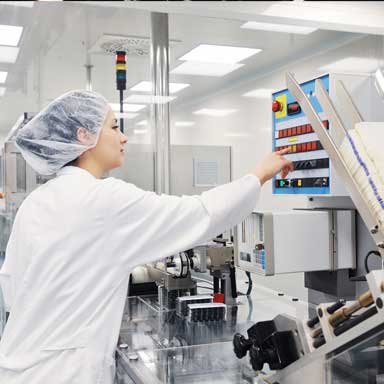
ENZ Pharmtech Dietary Supplement Manufacturer
ENZ Pharmtech Dietary Supplement Manufacturer offers a One-Stop Solution Service for Private Label Manufacturing. We eliminate the guesswork from procurement by providing transparent unit economics, unmatched quality control, and scalable production.
With state-of-the-art equipment, advanced production lines, and mature, market-tested formulations, our professional team leverages decades of experience to bring your brand to life. We are deeply qualified in the health supplements field and hold uncompromising global certifications including ISO (FSSC22000), HACCP, cGMP, BRCS, FDA registration, and HALAL compliance.Explore Private Label Solutions
Whether you need standard capsule encapsulation or complex gummy formulations, partnering with ENZ Pharmtech guarantees that your investment yields a premium, compliant, and highly profitable product ready for retail dominance.
Frequently Asked Questions (FAQ)
What is the single biggest factor driving up private label supplement manufacturing costs?
The formulation type and ingredient origin are the primary drivers. Utilizing patented, clinically researched raw materials will drastically increase your unit cost compared to generic commodity ingredients. Additionally, the delivery format dictates overhead; gummies and softgels cost significantly more to manufacture than standard capsules.
Can I launch a private label supplement brand with zero minimum order quantity?
While some brokers advertise zero minimums, true manufacturers require MOQs to cover the cost of machine setup, raw material sourcing, and labor. In most professional situations, achieving a profitable unit margin requires an MOQ of at least 500 to 1,000 units. Anything less is economically unviable for serious commercial scaling.
Are third-party testing costs included in standard manufacturing quotes?
Not always. You must ask your manufacturer if their quote includes microbiological testing, heavy metals testing, and identity verification. If it does not, you will have to pay an independent lab to verify your product, which adds significant hidden costs to your initial production run.
Authoritative Industry References
To ensure your brand complies with global quality and regulatory standards, we advise consulting the following organizations regarding supplement manufacturing practices:
- U.S. Food and Drug Administration (FDA) – Provides definitive guidelines on Current Good Manufacturing Practices (cGMP) and labeling regulations for dietary supplements.
- NSF International – The leading independent global health and safety organization offering facility auditing and rigorous product certification for the sports nutrition and wellness industries.
- Council for Responsible Nutrition (CRN) – The premier trade association representing dietary supplement manufacturers, offering industry best practices, supply chain guidelines, and scientific research.