
When a supplement brand cannot quickly identify which supplier, raw-material lot, test result, and finished-product batch are connected, it has a traceability problem—not simply a paperwork problem. A missing link can delay an investigation, complicate a customer complaint, and make it harder to determine which products may need to be held or recalled.
To improve ingredient traceability in supplement manufacturing, build a documented chain of identity from supplier approval through receipt, testing, dispensing, production, packaging, and distribution. The strongest system connects physical material labels with controlled records and finished-batch information. Software can make that system faster, but it cannot compensate for inaccurate receiving records or poorly controlled procedures.
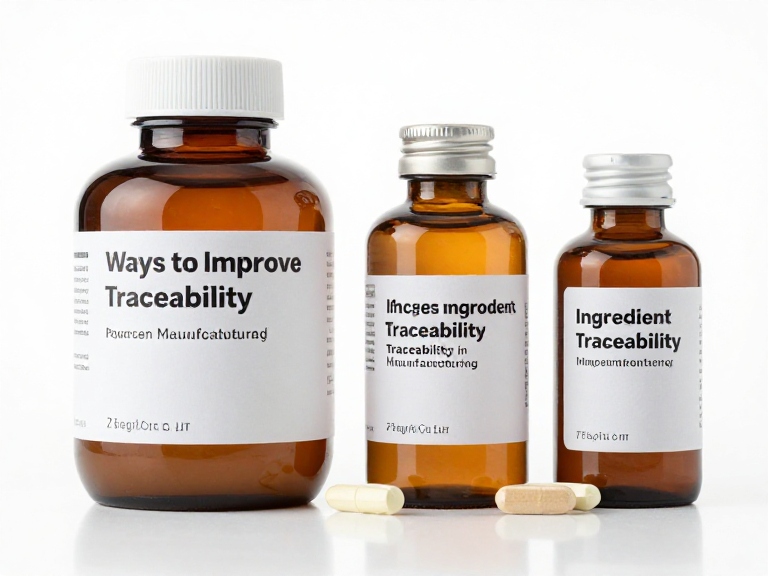
Quick Answer: How Do You Improve Ingredient Traceability?
The most effective approach is to establish seven controls: qualify ingredient suppliers, assign unique lot identifiers, verify incoming materials, maintain a controlled inventory trail, connect ingredients to batch manufacturing records, retain testing and release documentation, and test the system through mock traceability exercises.
For most supplement manufacturers, the priority should be accurate lot-level records before investing in expensive blockchain or enterprise software. A well-maintained spreadsheet or manufacturing system with controlled access can be more useful than a sophisticated platform if staff do not record material movements correctly.
Table of Contents
- What Is Ingredient Traceability?
- Why Traceability Matters
- 7 Ways to Improve Ingredient Traceability
- How the Traceability Workflow Works
- Traceability Tools and Systems Compared
- Benefits and Limitations
- Common Traceability Mistakes
- Choosing a Supplement Manufacturing Partner
- How ENZ Pharmtech Supports Supplement Brands
- Expert Recommendation
- Frequently Asked Questions
- References
What Is Ingredient Traceability in Supplement Manufacturing?
Ingredient traceability is the ability to identify and document where an ingredient came from, how it was received and handled, which production batches used it, and where the resulting finished products went. It creates a record connecting raw materials to manufacturing activities and, ultimately, to distributed products.
For example, a manufacturer producing a capsule containing magnesium, an herbal extract, and a flow agent should be able to identify the supplier and lot number for each component. It should also be able to connect those ingredient lots to the specific batch record, testing results, packaging run, and finished-product lot code.
This is different from simply keeping supplier invoices. An invoice may show that a company purchased an ingredient, but it may not prove which lot was used in a particular production batch. Traceability requires the material identity and its movement to remain connected throughout the manufacturing process.
What information should be traceable?
- Ingredient identity, grade, specification, and supplier.
- Supplier lot or batch number and the manufacturer’s internal receiving number.
- Receipt date, quantity, packaging condition, and storage location.
- Sampling, identity testing, laboratory results, and quality disposition.
- Dispensed quantity, production batch, operator, and date of use.
- Manufacturing deviations, rework, rejected material, and reconciliation records.
- Finished-product lot number, packaging records, release status, and distribution details.
Why Ingredient Traceability Matters for Supplement Manufacturers
Traceability is a practical quality-management control. It helps manufacturers investigate unexpected test results, identify potentially affected batches, respond to customer complaints, and support product withdrawal or recall decisions when necessary.
Consider a manufacturer that receives two lots of a botanical extract from the same supplier. If both containers are stored under one general ingredient label and the production team records only the ingredient name, the manufacturer may not know which lot entered a specific capsule batch. If a later investigation identifies a problem with one supplier lot, the company may have to place more inventory on hold than necessary—or struggle to identify all affected products.
Accurate ingredient traceability reduces this uncertainty. It also supports supplier performance reviews, inventory control, quality investigations, and more reliable production planning. For brands selling through distributors or multiple markets, the ability to connect finished-product lot codes to manufacturing records is particularly important.
In the United States, dietary supplement current good manufacturing practice requirements under 21 CFR Part 111 establish controls for components, production and process control, quality control, and records. Traceability procedures should be designed around the actual regulatory obligations that apply to the facility and product, rather than treated as an optional technology project.
7 Ways to Improve Ingredient Traceability in Supplement Manufacturing
1. Qualify Ingredient Suppliers Before Purchasing
Traceability starts before raw materials arrive at the factory. If a manufacturer cannot establish who produced an ingredient, where it came from, and what documentation supports its identity and quality, the downstream record will have a weak foundation.
Build a supplier approval process that evaluates company identity, manufacturing or distribution role, quality-system information, ingredient specifications, testing documentation, change-notification practices, and complaint history. For higher-risk materials, request additional evidence such as manufacturing-site information, relevant audit records, or independent laboratory reports.
Do not treat a certificate of analysis (COA) as complete supplier qualification. A COA is a lot-specific document that reports test results or specifications; it does not independently prove the supplier’s overall quality system or guarantee that the material in every delivered container matches the document.
- Maintain an approved supplier list with current status.
- Record the supplier’s legal name, manufacturing site, and distributor relationship where applicable.
- Define the documents required for each ingredient category.
- Review supplier changes, deviations, and recurring quality issues.
- Require notification before changes to ingredient source, process, specification, or manufacturing location where appropriate.
Our recommendation: Prioritize supplier qualification for botanical extracts, probiotics, specialty amino acids, and other materials where source, identity, potency, or handling conditions can materially affect product quality.
2. Assign a Unique Internal Lot Number to Every Incoming Ingredient Lot
Supplier lot numbers should be preserved, not replaced. At receiving, assign an internal identifier that connects the delivered material to the original supplier lot, purchase order, receiving date, and inspection record.
For example, a receiving record could link internal lot RM-2026-0148 to the supplier’s original lot BGX-24091. The internal number should appear on the warehouse label and in the inventory record. Staff should be able to search either number and retrieve the same material history.
Do not create one generic lot number for multiple supplier lots simply because they contain the same ingredient. Combining lots without a documented, controlled process can break the connection between the raw material and the finished batches that used it.
- Keep the supplier’s original lot number visible or electronically linked.
- Use a consistent internal lot-number format.
- Label every container or approved storage unit.
- Record split containers and repackaging without losing the original lot identity.
- Prevent duplicate or reused lot identifiers.
Practical insight: The most reliable lot-number system is one that warehouse operators can follow under normal production pressure. Avoid codes so complicated that staff routinely write them down incorrectly.
3. Strengthen Incoming Inspection, Sampling, and Identity Verification
Receiving is a critical control point. A purchase order may specify one ingredient, while the delivered container, label, or accompanying document may show a different grade, source, or lot. The receiving process must detect discrepancies before materials enter usable inventory.
At minimum, compare the delivery against the purchase order and approved specification. Record the ingredient name, supplier, lot number, quantity, packaging condition, and receipt date. Check the container label and supporting documents, and place materials into the appropriate quality status until required checks are completed.
Identity testing is especially important. Under applicable dietary supplement cGMP requirements, manufacturers must establish and follow appropriate component specifications and identity verification procedures. The precise testing approach depends on the ingredient, its risks, and the regulatory requirements that apply. Do not assume that a supplier COA automatically replaces the manufacturer’s required verification.
- Use a documented sampling plan appropriate to the material and risk.
- Record sample identifiers and the lot from which each sample was taken.
- Connect laboratory reports to the internal receiving lot.
- Document deviations such as damaged packaging, missing labels, or quantity discrepancies.
- Keep unapproved or rejected materials physically or electronically segregated from released stock.
When it is worth investing more: For botanical ingredients with complex identity profiles or materials with a higher risk of substitution, use a risk-based verification strategy and qualified analytical methods. A cheaper receiving process is not economical if it allows an unsuitable material into production.
4. Track Every Ingredient Movement Through Controlled Inventory Records
A lot number is useful only if it remains connected to the material after receiving. Inventory controls should track where a lot is stored, whether it is released or on hold, how much remains, and when it is issued to production.
Use clearly defined inventory statuses such as quarantine, approved, rejected, expired, and returned. The exact labels can vary, but the rules must be unambiguous. Staff should not be able to issue a quarantined ingredient simply because it appears in the warehouse inventory list.
For each movement, record the ingredient lot, quantity, date, source location, destination location, and responsible operator. If a container is divided into smaller units, retain the parent-lot relationship on every child container. This prevents a common traceability failure: the original drum is identifiable, but the smaller container used on the production floor is not.
Use first-expired, first-out (FEFO) where appropriate for materials with expiry or retest dates. FEFO supports stock rotation, but it does not replace lot-level traceability or quality release controls.
5. Link Every Ingredient Lot to the Finished-Product Batch Record
This is where ingredient traceability becomes operationally valuable. The batch manufacturing record should identify every component used in a production run, including its internal lot number, supplier lot, actual quantity dispensed, and relevant production details.
For a multi-ingredient capsule, for example, the record should connect each active ingredient and excipient to the finished batch. If a production run uses more than one approved lot of the same component, each lot and quantity must be documented clearly. Do not record only the ingredient’s generic name or the planned formulation quantity.
Dispensing controls should also confirm that the correct material and lot were selected. Barcode scanning can reduce manual transcription errors, but it must be supported by accurate labels, controlled master data, and operator procedures.
- Verify ingredient identity before dispensing.
- Record actual weighed quantities rather than copying theoretical values.
- Identify the operator and relevant date or time.
- Document material returns, unused quantities, and reconciliation.
- Connect deviations and rework to the affected batch record.
We recommend: Make the production batch record the central connection between raw-material history and finished-product history. If a quality team cannot move from a finished lot number back to every ingredient lot without relying on an employee’s memory, the system needs improvement.
6. Connect Testing, Quality Release, Packaging, and Distribution Records
Ingredient traceability should not stop when the blend or capsules are manufactured. The finished-product lot must connect to the relevant in-process checks, finished-product test results, packaging components, label version, quality review, and release decision.
For example, if a finished-product batch fails a specification, the quality team should be able to retrieve its manufacturing record, ingredient lots, test reports, packaging records, and disposition history. If a complaint concerns an incorrect label, the investigation should identify the packaging run and label version rather than focusing only on the ingredient suppliers.
Distribution records complete the forward trace. They should identify which finished-product lots were shipped, in what quantities, to which customers or distribution locations, and on what dates. This supports a more targeted assessment if a product hold, market withdrawal, or recall becomes necessary.
Retain relevant records in accordance with applicable regulations and the company’s approved record-retention procedures. Protect records from unauthorized changes, and ensure that corrections preserve the original entry, the reason for the change, and the identity of the person making it.
7. Conduct Mock Traceability Exercises and Measure Performance
A traceability procedure should be tested before a real incident occurs. Select a finished-product lot and ask the team to identify every ingredient lot used, the related supplier documents, test results, production record, packaging details, and distribution destinations. Then reverse the exercise: select a raw-material lot and identify every finished batch that used it.
These exercises expose practical gaps that a written procedure may not reveal. A record might exist but be stored in a different system, use an inconsistent lot number, or require an employee who is unavailable to interpret it. The goal is not simply to produce a complete file; it is to retrieve accurate information quickly and consistently.
Useful performance measures include:
- Percentage of incoming ingredient lots with complete documentation.
- Percentage of production batches with fully linked ingredient-lot records.
- Time required to trace a finished lot back to its raw materials.
- Time required to trace a raw-material lot forward to affected finished batches.
- Number of inventory discrepancies and unresolved lot-identity errors.
- Corrective actions completed after mock exercises.
Set internal targets based on product risk, operation size, and regulatory requirements. Repeat exercises after major software changes, supplier changes, process changes, or significant deviations.
How Ingredient Traceability Works Across the Supplement Manufacturing Process
A useful traceability model connects each stage rather than maintaining isolated documents. The following table shows the records that should be linked at each point.
| Process Stage | Key Information to Capture | Traceability Output |
|---|---|---|
| Supplier approval | Supplier identity, site, ingredient specification, qualification status | Approved supplier and material record |
| Receiving | Purchase order, supplier lot, quantity, date, packaging condition | Internal receiving lot number |
| Sampling and testing | Sample ID, test method, results, laboratory, review status | Lot-specific quality evidence |
| Storage | Location, status, quantity, expiry or retest date | Controlled inventory history |
| Dispensing | Ingredient lot, actual quantity, operator, production batch | Ingredient-to-batch link |
| Manufacturing | Batch record, process parameters, deviations, reconciliation | Complete production history |
| Packaging and release | Finished lot, label version, packaging materials, test results, release | Approved finished-product record |
| Distribution | Customer, destination, shipment date, quantity, finished lot | Forward distribution trace |
The most important design principle is a consistent identifier. The internal raw-material lot must appear in receiving, inventory, dispensing, and batch records. The finished-product lot must then connect the batch record to packaging, quality release, and distribution. When identifiers change between systems, maintain an explicit cross-reference rather than expecting staff to infer the relationship.
Traceability Technology: Spreadsheet, ERP, or Dedicated Manufacturing Software?
Technology should solve a defined recordkeeping problem. A small operation does not automatically need an expensive enterprise resource planning system, while a manufacturer handling many SKUs, suppliers, and production runs may quickly outgrow manual records.
| System | Best Use Case | Advantages | Limitations |
|---|---|---|---|
| Controlled spreadsheet | Small operations with low transaction volume | Low cost, familiar, quick to implement | Manual entry, version-control risk, limited workflow enforcement |
| Inventory management software | Operations needing lot and stock movement control | Better visibility of locations, quantities, and lot status | May not connect fully to manufacturing and quality records |
| ERP system | Growing manufacturers with purchasing, inventory, production, and finance needs | Can connect supplier, inventory, production, and order data | Implementation cost, configuration effort, training, and maintenance |
| MES or manufacturing execution system | Complex production with detailed process and operator records | Supports controlled production workflows and batch-level data capture | Requires integration and disciplined process design |
| Barcode or QR-code tracking | Reducing manual identification and movement errors | Faster scanning and more consistent data capture | Labels and master data must be correct; scanning alone does not prove quality |
Is blockchain necessary for supplement traceability?
Usually not. Blockchain may be relevant to a defined multi-party data-sharing problem, but it does not establish ingredient identity, validate laboratory results, or ensure that a warehouse operator scanned the correct container. A conventional, access-controlled system with audit trails and reliable lot relationships is generally the more practical starting point.
For most manufacturers, the sensible upgrade path is to standardize lot identifiers and batch records first, introduce barcode scanning where manual errors occur, and then integrate inventory, production, quality, and distribution data as the operation grows.
Benefits and Limitations of Strong Ingredient Traceability
Benefits
- Faster investigations: Quality teams can identify supplier lots and affected production batches without reconstructing events from scattered documents.
- More targeted product holds: Better lot relationships can help distinguish affected inventory from unrelated production, subject to the facts and applicable regulatory decisions.
- Stronger supplier oversight: Repeated quality issues can be connected to specific suppliers, materials, or lots.
- Improved inventory control: Quarantine, release, expiry, and stock movement become easier to manage.
- More defensible records: Complete, controlled documentation supports quality review and regulatory inspection.
- Better customer confidence: Brands can respond more consistently to questions about sourcing, quality documentation, and finished-product batches.
Limitations
- Traceability requires time, training, and disciplined recordkeeping.
- Software implementation can be costly if workflows are poorly defined.
- Supplier documents may be incomplete or inconsistent.
- Data entry errors can undermine even a well-designed system.
- Traceability does not itself prove that an ingredient is safe, effective, authentic, or compliant.
Pros and cons of investing in a more formal traceability system
| Pros | Cons |
|---|---|
| Creates a documented link from incoming ingredient lots to finished-product lots. | Requires staff training and consistent execution across departments. |
| Can shorten investigations and improve the accuracy of affected-lot identification. | Software, integration, validation, and maintenance can increase operating costs. |
| Improves inventory status control and supplier performance monitoring. | Inaccurate source data or missed transactions still create gaps. |
| Supports more organized quality records and inspection readiness. | Does not replace identity testing, quality control, or regulatory compliance. |
Common Ingredient Traceability Mistakes to Avoid
Using the ingredient name instead of the lot number
Recording “green tea extract” in a batch record is not enough. The record must identify the actual lot used. Otherwise, a manufacturer cannot reliably connect a supplier’s lot-specific documentation to finished production.
Accepting supplier COAs without a defined verification process
A COA is useful evidence, but it should be reviewed against the approved specification and the manufacturer’s testing and verification procedures. A document that is not linked to the delivered lot has limited value.
Combining partial containers without preserving identity
When a drum is split into smaller containers, each container must remain linked to the original lot. If materials from multiple lots are combined, the operation needs a documented, controlled method that preserves the full relationship.
Allowing manual corrections without an audit trail
Changing a lot number or quantity without recording who made the correction, when it occurred, and why it was necessary undermines record reliability. Establish controlled correction procedures for both paper and electronic records.
Failing to trace packaging components
Ingredient traceability is essential, but finished-product investigations may also involve labels, bottles, caps, desiccants, cartons, and other packaging components. Link relevant packaging lots and label versions to the finished-product batch.
Testing the procedure only during an actual problem
A written procedure that has never been tested may fail under time pressure. Schedule mock trace exercises and correct gaps before they affect a real investigation.
How to Choose a Supplement Manufacturer with Strong Traceability
Brands outsourcing production should evaluate a manufacturer’s traceability system before signing a long-term agreement. Do not assume that a supplier’s general GMP statement tells you how it identifies, tests, stores, dispenses, and records your ingredients.
Questions to ask during supplier qualification
- Can you trace a finished-product lot back to every ingredient supplier lot?
- Can you trace one raw-material lot forward to all finished batches that used it?
- How are internal lot numbers assigned and linked to supplier lot numbers?
- What identity testing and incoming verification are performed for each ingredient category?
- How are quarantined, released, rejected, expired, and returned materials controlled?
- Can you provide batch manufacturing records and relevant lot-specific quality documents?
- How are deviations, rework, and material reconciliation documented?
- How long are records retained, and how are electronic changes controlled?
- Can you conduct a mock traceability exercise and explain the results?
Compare manufacturers on evidence, not marketing claims
When evaluating a supplier, request a redacted example of a batch record or a demonstration of its traceability workflow where commercially and legally appropriate. The objective is to understand whether the manufacturer can connect the records—not to obtain another generic quality brochure.
Also consider the product category. A simple vitamin capsule, a multi-ingredient botanical formula, a probiotic product, and a sports-nutrition powder may require different ingredient controls and storage considerations. For example, brands developing probiotic capsules with prebiotics should pay particular attention to supplier specifications, material handling conditions, and relevant stability and finished-product evidence.
For amino-acid products, ingredient identity and formulation records should connect each component to the final batch. Examples include amino acid and BCAA capsules. The same principle applies to botanical and specialty formulas such as AKG capsules or apigenin capsules: the product name is not a substitute for lot-specific component and production records.
Calculate the cost-benefit before choosing a supplier
A manufacturer with stronger traceability may not always offer the lowest unit price. However, the relevant comparison is the total cost of ownership: documentation quality, testing arrangements, communication, production reliability, deviation handling, and the ability to investigate issues.
For a startup, a clear and accessible paper or electronic lot system may be sufficient if it meets applicable requirements and is executed consistently. For commercial users with multiple SKUs, frequent production runs, and international distribution, integrated inventory and batch records can justify a higher manufacturing or system cost. Paying more for a supplier that can demonstrate reliable records may be more economical than spending time rebuilding missing information later.
How ENZ Pharmtech Supports Supplement Brands
ENZ Pharmtech provides private-label dietary supplement manufacturing solutions for startups, small businesses, and established nutraceutical brands. Its service offering covers a range of product categories, including vitamins and minerals, herbal supplements, sports nutrition, weight management, immune support, beauty and skin health, and specialty formulations.
For a brand choosing a manufacturing partner, the important discussion is not only which formula can be produced. It is also how ingredient specifications, supplier documentation, incoming checks, batch records, testing, and finished-product release are managed for the particular project. These details should be confirmed directly during product development and supplier qualification.
Explore Private Label Supplements with No Minimum Order Options
ENZ Pharmtech presents private-label supplement solutions for businesses that want to develop products without committing to large initial order quantities. Its stated service range includes vitamins and minerals, herbal supplements, sports nutrition, weight management, immune support, beauty and skin health, and specialty formulas.
When discussing a project, ask for the ingredient specifications, applicable quality documentation, testing arrangements, batch-record information, and the traceability records available for your finished product. Confirm the exact MOQ, product options, lead time, and quality requirements for your selected formula.
Learn about ENZ Pharmtech private label supplements or review the dietary supplement product catalog to explore product categories.
For additional supplier research, compare the selection criteria in our guides to GMP-certified supplement manufacturers and Canadian supplement manufacturers. A directory is only a starting point: independently verify current certifications, facility scope, and the traceability controls relevant to your product.
Expert Recommendation: Build Traceability Around Lot-Level Evidence
Our recommendation is straightforward: do not start with software selection. Start by mapping the journey of one ingredient lot from supplier approval to finished-product distribution. Identify every record, label, system, and person involved. Then repeat the exercise in reverse, starting with a finished-product lot and tracing it back to the original ingredient lots.
If the team cannot complete either direction using controlled records, fix those gaps before investing in automation. Standardize internal lot numbers, establish receiving and inventory status controls, connect dispensing records to batch manufacturing records, and document finished-product release and distribution. Once those steps are reliable, barcode scanning or an integrated manufacturing system can improve speed and reduce transcription errors.
For beginners, a simple, controlled traceability procedure with clear responsibilities is better than a complicated system that employees do not use correctly. For commercial users, especially those managing multiple suppliers and product lines, integrated lot-level records become increasingly valuable. For higher-risk ingredients and complex formulas, stronger supplier qualification and risk-based verification deserve priority over cosmetic improvements to the software interface.
Ingredient traceability does not guarantee that every ingredient or finished product is safe or compliant. It gives the manufacturer the evidence needed to verify what happened, investigate problems, and make informed quality decisions. That is why it should be treated as a core manufacturing control—not an administrative task added after production.
Frequently Asked Questions About Ingredient Traceability in Supplement Manufacturing
1. What is ingredient traceability in supplement manufacturing?
Ingredient traceability is the documented ability to identify an ingredient’s source and supplier lot, track its receipt and handling, connect it to production batches, and identify the finished products made with it. It should also connect finished-product lots to quality release and distribution records.
2. Why is ingredient traceability important for dietary supplements?
It supports supplier oversight, quality investigations, inventory control, batch documentation, and targeted decisions about affected products. It also helps manufacturers demonstrate that materials and production activities are controlled under applicable requirements.
3. What does FDA 21 CFR Part 111 require for supplement traceability?
21 CFR Part 111 establishes current good manufacturing practice requirements for dietary supplements, including controls and records for components, production, process control, quality control, and distribution-related activities. Manufacturers should review the applicable provisions and design procedures that meet their specific obligations.
4. Is a certificate of analysis enough to prove ingredient traceability?
No. A COA is one part of the evidence. It should be linked to the actual received lot and reviewed against the approved specification and testing procedures. Traceability also requires records for receiving, storage, dispensing, production, and finished-product distribution.
5. How do manufacturers trace raw ingredients to finished products?
They assign or record unique lot identifiers at receiving, maintain those identifiers through inventory and dispensing, and record every ingredient lot and quantity used in the batch manufacturing record. The finished-product lot then links the batch to packaging, quality release, and distribution records.
6. Can small supplement manufacturers use spreadsheets for traceability?
A controlled spreadsheet may be workable for a small operation if it supports accurate lot-level records, access controls, version management, and applicable recordkeeping requirements. As transaction volume and process complexity grow, dedicated inventory or manufacturing software may be more reliable.
7. What is the difference between backward and forward traceability?
Backward traceability starts with a finished-product lot and identifies the ingredient lots and suppliers used to make it. Forward traceability starts with an ingredient lot and identifies every finished-product batch that used it and where those products were distributed.
8. How often should a supplement manufacturer conduct a mock traceability exercise?
Set a documented schedule based on product and operational risk, and repeat exercises after significant process, supplier, or system changes. The exercise should test both backward and forward traceability and document any gaps and corrective actions.
9. Does blockchain improve ingredient traceability?
Blockchain can support certain multi-party data-sharing applications, but it does not verify ingredient identity or guarantee accurate source data. Most manufacturers should first establish reliable lot numbering, controlled records, and batch-level links before considering more complex technology.
10. What should a brand ask a contract supplement manufacturer about traceability?
Ask whether the manufacturer can trace finished lots back to ingredient supplier lots and trace a raw-material lot forward to all affected finished batches. Also ask about incoming identity verification, COA review, inventory status controls, batch records, testing, record retention, and mock traceability exercises.
References
- Electronic Code of Federal Regulations – 21 CFR Part 111: Current Good Manufacturing Practice in Manufacturing, Packaging, Labeling, or Holding Operations for Dietary Supplements. Primary US regulatory text covering dietary supplement cGMP requirements and associated records.
- U.S. Food and Drug Administration – Dietary Supplements: Guidance Documents and Regulatory Information. FDA resources for understanding dietary supplement regulatory obligations.
- U.S. Food and Drug Administration – Food Safety Modernization Act (FSMA). FDA information on the broader food-safety framework; manufacturers should assess which provisions apply to their specific operations and products.
Regulatory requirements can depend on product type, facility activities, and destination market. This article is an operational overview, not a substitute for reviewing applicable regulations or obtaining qualified regulatory advice.