
In supplement manufacturing, quality cannot be created by a final laboratory test alone. A product may pass a finished-product test and still have weaknesses in supplier qualification, ingredient identity, formulation accuracy, contamination prevention, packaging, or batch documentation. For supplement brands, these failures can lead to customer complaints, product recalls, regulatory exposure, and expensive production delays.
The most reliable approach is to build quality control into every stage, from raw material purchasing to final batch release. Whether you are launching private-label vitamins, protein powder, herbal capsules, gummies, or liquid supplements, the eight quality control points in supplement manufacturing below provide a practical framework for evaluating a manufacturer’s quality system.

Quick Answer: What are the key quality control points in supplement manufacturing?
The eight essential checkpoints are raw material qualification, ingredient identity and incoming testing, formulation and weighing accuracy, in-process manufacturing controls, contamination prevention, finished-product testing, packaging and label verification, and batch documentation with final release. Brands should verify that each checkpoint has defined acceptance criteria, recorded results, and a documented procedure for handling failures.
Our recommendation: Do not select a supplement manufacturer solely because it advertises GMP compliance, offers a low price, or provides a certificate of analysis. Ask how the manufacturer controls each stage, what evidence it retains, which tests it performs internally or through qualified laboratories, and how it investigates deviations. A credible quality system should be explainable and auditable.Table of Contents
- Quick summary of supplement quality control
- What quality control means in supplement manufacturing
- 1. Raw material supplier qualification
- 2. Ingredient identity and incoming testing
- 3. Formulation, weighing, and dispensing accuracy
- 4. In-process manufacturing controls
- 5. Contamination prevention and sanitation
- 6. Finished-product testing
- 7. Packaging, labeling, and traceability
- 8. Batch documentation and final release
- Comparing supplement quality control approaches
- How to evaluate a supplement manufacturer
- Quality control costs and commercial value
- Private-label supplement solutions from ENZ Pharmtech
- Common quality control mistakes
- Expert recommendations
- Frequently asked questions
- References
Quick Summary: The 8 Quality Control Points in Supplement Manufacturing
| Quality control point | What to verify | Why it matters | Evidence to request |
|---|---|---|---|
| 1. Supplier qualification | Supplier approval, material specifications, supply-chain risks | Reduces the risk of unreliable or unsuitable ingredients entering production | Approved supplier records, specifications, qualification documents |
| 2. Ingredient identity and incoming testing | Identity, purity, strength, relevant contaminants | Helps prevent substitution, adulteration, and out-of-specification materials | Incoming inspection records, test results, certificates of analysis |
| 3. Formulation and weighing | Formula version, ingredient quantities, dispensing checks | Controls serving accuracy and batch consistency | Master formula, weighing records, independent verification where required |
| 4. In-process controls | Mixing, processing parameters, fill weights, production conditions | Detects variation before the batch is complete | In-process test records, equipment logs, approved procedures |
| 5. Contamination prevention | Sanitation, allergen controls, environmental risks, cross-contact | Reduces biological, chemical, and physical contamination risks | Cleaning records, sanitation procedures, risk assessments |
| 6. Finished-product testing | Identity where appropriate, potency, microbiology, contaminants, physical properties | Checks whether the finished batch meets its specifications | Approved specifications and batch-specific analytical results |
| 7. Packaging and labeling | Correct label, ingredients, serving directions, lot code, closure and seal | Prevents mislabeling, mix-ups, and avoidable product deterioration | Label approvals, line-clearance records, packaging inspection records |
| 8. Documentation and release | Batch record review, deviations, corrective actions, release authorization | Creates traceability and prevents unapproved product from shipping | Completed batch records, deviation reports, release approval |
What Quality Control Means in Supplement Manufacturing
Quality control (QC) is the set of inspections, tests, measurements, and acceptance decisions used to determine whether ingredients, manufacturing operations, and finished supplements meet defined requirements. Quality assurance (QA) is broader: it includes the systems, procedures, training, audits, and oversight designed to prevent quality failures in the first place.
In a mature operation, QC and QA work together. QC may detect an ingredient that fails an identity test, while QA ensures the material is quarantined, the investigation is documented, and the supplier or process problem is addressed. A laboratory result without an effective response procedure is not a complete quality system.
Requirements depend on the product category and market. In the United States, dietary supplement manufacturers are subject to applicable FDA requirements under 21 CFR Part 111, which addresses current good manufacturing practice for dietary supplements. Other markets may apply different or additional requirements. A brand selling internationally should confirm the rules for each destination instead of assuming that one certification automatically satisfies every jurisdiction.
Practical principle: Quality control should be risk-based. A probiotic capsule, a botanical extract, a protein powder, and a gummy vitamin do not have identical quality risks. The manufacturer should explain why each test and process control is appropriate for the actual formula, dosage form, ingredients, and intended market.
1. Raw Material Supplier Qualification
Raw material quality starts before an ingredient reaches the factory. Even a well-controlled production line cannot reliably compensate for an ingredient that is adulterated, contaminated, incorrectly identified, or inconsistent with the approved specification.
What manufacturers should control
A supplier qualification program should establish which suppliers and materials are approved, what specifications apply, which documents are required, and how supplier performance is reviewed. Depending on the risk profile, qualification may include document reviews, audits, testing history, change notifications, and periodic reassessment.
For botanical ingredients, manufacturers may need to assess species identity, plant part, extraction method, geographic origin, and risks associated with pesticides, heavy metals, microbial contamination, or adulteration. For protein ingredients, relevant considerations may include protein content, amino acid profile where appropriate, allergens, microbiological quality, and contaminants linked to the source or processing method.
How buyers should assess this checkpoint
- Ask whether suppliers must be approved before their materials can be used.
- Request the ingredient specification and the manufacturer’s supplier qualification procedure, with confidential information appropriately redacted.
- Confirm how the manufacturer handles supplier changes, recurring failures, and missing documentation.
- For higher-risk materials, ask how supplier risk affects testing frequency and verification requirements.
From our experience, the weakest answer is “we buy from trusted suppliers” without a documented approval process. Trust can inform supplier selection, but it cannot replace evidence. If you are comparing GMP certified supplement companies, look beyond the certification claim and ask how each company verifies incoming ingredients.
2. Ingredient Identity and Incoming Testing
Supplier qualification and incoming testing are related but distinct. Qualification evaluates the supplier and the reliability of the supply chain; incoming testing helps determine whether the actual material received is suitable for use.
Identity testing is not the same as purity testing
Identity testing helps establish whether a material is what it claims to be. Purity or contaminant testing evaluates other characteristics, such as the presence of unwanted substances. Potency testing determines whether a relevant active or nutrient is present at the required level. A single test rarely answers all three questions.
Depending on the ingredient and risk, methods may include appropriate chemical identification techniques, chromatography, spectroscopy, microscopy, microbiological methods, or other validated analytical approaches. The right method depends on the material and the claim being verified. A certificate of analysis should be reviewed for the specific test methods, results, specifications, and lot identity rather than accepted as a generic guarantee.
What should happen when a material fails?
Materials awaiting required testing or review should remain under appropriate control. A failed or questionable result should trigger a documented investigation and disposition decision. The manufacturer should not quietly substitute another lot, retest repeatedly until a passing result appears, or release material without an approved justification.
For commercial users, ask which tests are performed for every incoming lot, which rely on supplier documentation, and how the company justifies any reduced-testing approach. Where testing is outsourced, confirm how the laboratory is qualified and how results are reviewed.
3. Formulation, Weighing, and Dispensing Accuracy
A formula can contain high-quality ingredients and still produce a poor supplement if the wrong quantities are weighed, the wrong formula version is used, or an ingredient is omitted. Formulation control is especially important when a product includes many active ingredients or uses low-dose compounds that require precise handling.
Control the approved master formula
The production team should work from an authorized formula and manufacturing instructions. Revisions need approval, version control, and clear implementation. If a brand changes a flavor, active ingredient level, supplier, or capsule size, the manufacturer should assess the effect on the formula, process, specifications, label, and any required regulatory review.
Verify weighing and dispensing
Scales and other measuring equipment should be suitable for the quantities being measured and managed under an appropriate calibration or verification program. Ingredient identity should be checked during dispensing, and weighing records should capture the material, lot number, actual quantity, and relevant operator or verification details.
For ingredients used at low levels, the manufacturer may need additional controls to ensure accurate measurement and uniform distribution. These may include suitable premixing, controlled addition sequences, and validated or otherwise scientifically justified mixing procedures.
Why this matters commercially
Formulation errors can lead to potency failures, inconsistent servings, label discrepancies, and expensive rework. Brands should ask how a manufacturer prevents formula mix-ups when several products share similar names or packaging. For example, ADK 10 Capsules and ADK 5 Capsules illustrate why product identity and formulation version must remain clear throughout manufacturing and packaging.
4. In-Process Manufacturing Controls
Finished-product testing happens too late to be the only line of defense. In-process controls help identify variation while there is still an opportunity to correct a process or hold the batch before additional materials and labor are committed.
Controls depend on dosage form
For powders, relevant controls may include blend uniformity where appropriate, moisture-related measurements, particle-size considerations, fill weight, and process parameters that affect mixing or flow. For capsules and tablets, checks may include weight variation, physical integrity, disintegration or dissolution testing where applicable, and process-specific controls. Gummies may require monitoring of cooking or depositing conditions, unit weight, moisture, texture, and other product-specific characteristics. Liquid supplements may require controls for mixing, filling volume, homogeneity, and relevant microbial risks.
Not every test belongs in every production run. The manufacturer should define appropriate checkpoints based on the formulation, dosage form, equipment, historical performance, and product specifications. Acceptance limits must be established in advance, not improvised after results become available.
Equipment and process consistency
Mixers, filling machines, tablet presses, encapsulation equipment, and packaging lines need maintenance and suitable operating procedures. Where a parameter has a meaningful effect on product quality, the manufacturer should define how it is monitored and what happens when it moves outside its approved range.
For buyers evaluating liquid supplement manufacturers, ask specifically about mixing, filling, microbial controls, packaging compatibility, and stability. A factory experienced in powders is not automatically equipped to manage the risks of a liquid formulation.
5. Contamination Prevention and Sanitation
Contamination can enter through raw materials, people, equipment, the production environment, packaging components, or inadequate cleaning. Effective controls must address the hazards relevant to the product and process instead of relying on a general statement that the factory is clean.
Microbiological and chemical risks
Depending on the product, quality plans may address specified microorganisms, total microbial counts, heavy metals, pesticides, residual solvents, mycotoxins, or other contaminants. These are not universal test requirements for every supplement. The manufacturer should establish appropriate controls based on the ingredients, processing methods, intended consumers, destination-market requirements, and product risk assessment.
Cross-contact and allergen control
Facilities that handle multiple formulas may need procedures for allergen segregation, material identification, equipment cleaning, line clearance, and prevention of cross-contact. This matters when a production site handles common allergens such as milk, soy, or other ingredients relevant to its product portfolio.
Ask whether cleaning procedures are documented, how cleaning effectiveness is verified, how personnel are trained, and how the facility controls the movement of materials and equipment. A cleaning record shows that a procedure was recorded; verification evidence helps show whether the control is effective.
When sanitation controls should be strengthened
Additional scrutiny may be warranted when manufacturing products with higher microbiological sensitivity, handling potent ingredients, changing between allergen profiles, or processing materials with known contamination risks. If a manufacturer cannot explain its contamination-prevention strategy for your formula, do not assume that a general GMP statement resolves the issue.
6. Finished-Product Testing
Finished-product testing verifies whether the completed batch meets its established specifications. It is an essential release checkpoint, but it should confirm a controlled process rather than compensate for an uncontrolled one.
Which tests should be considered?
The required panel depends on the product. A quality plan may include identity, active ingredient or nutrient content, microbiological testing, specified contaminants, physical characteristics, and other tests needed to support product quality and shelf-life expectations. Not every supplement requires every test, and the same analytical method may not be suitable for every formula.
For example, a multivitamin may require assessment of selected vitamin and mineral levels, while a protein powder may require protein-related testing, moisture or other physical measurements, allergen controls, and appropriate contaminant checks. A probiotic product may need organism identity and viable-count considerations, while a liquid product may require additional stability and microbiological attention.
Review the certificate of analysis properly
A certificate of analysis (CoA) should identify the product or material, batch or lot, relevant test results, specifications, and laboratory or approval information. The document should be traceable to the actual batch being evaluated. A generic sample CoA is not evidence that the commercial batch passed testing.
Ask whether testing is performed in-house or by an external laboratory, whether methods are appropriate for the analytes and matrix, and how out-of-specification results are investigated. Where laboratory accreditation is relevant, verify the scope and applicability rather than relying on a logo alone.
Do not confuse a passing test with proof of every claim
A laboratory result can support a specific analytical conclusion; it does not automatically validate every marketing statement on a product label. Claims about clinical effects, bioavailability, purity, sustainability, or manufacturing origin may require different evidence. Keep analytical evidence and marketing substantiation separate.
For brands considering private label supplements in Europe, establish the destination market and applicable product requirements before finalizing the testing plan. Testing decisions should follow the formulation and regulatory obligations, not a generic checklist copied from another product.
7. Packaging, Labeling, and Traceability
Packaging is part of quality control, not merely presentation. Incorrect labels, weak closures, unsuitable packaging materials, or missing lot codes can compromise product integrity and create serious problems even when the formulation itself is correct.
Label verification
Before packaging begins, confirm that the approved artwork and label match the intended product and market. Checks may include the product name, ingredient declaration, serving information, warnings, allergen statements, net quantity, lot coding, expiry or best-before information where applicable, and manufacturer or responsible-party details required by the destination market.
Exact label requirements vary by jurisdiction and product type. Have qualified regulatory personnel review the final label rather than assuming that an existing design is compliant in every country.
Packaging compatibility and protection
Packaging should be suitable for the dosage form and expected storage conditions. Consider moisture, oxygen, light, closure integrity, transport conditions, and potential interactions between the product and packaging components. A powder that absorbs moisture may need different protection from a liquid or gummy supplement.
Line clearance and traceability
Before switching products or labels, the packaging line should be checked to reduce the risk of leftover components or mix-ups. The batch record should connect the finished product with its ingredients, production date, packaging components, lot code, and release decision. This chain is critical if the company later needs to investigate a complaint or conduct a market withdrawal.
8. Batch Documentation and Final Release
The final quality control point is the decision to release a batch for distribution. A batch should not ship merely because production has finished or a customer is waiting. Required records, test results, deviations, and other release conditions must be reviewed and approved under the manufacturer’s quality system.
What a batch record should demonstrate
Depending on the process, records should allow a reviewer to reconstruct the batch: which approved formula was used, which ingredient lots were dispensed, what quantities were recorded, which equipment and process conditions were used, what in-process checks occurred, which packaging materials were applied, and whether the required tests met specification.
Deviation handling and corrective action
When a process falls outside an approved requirement, the manufacturer should document the deviation, assess its potential effect on product quality, investigate the cause, and determine the appropriate disposition. Corrective and preventive actions should address the underlying problem when warranted. Repeated deviations should prompt a review of whether existing controls are adequate.
Complaint handling and recalls
A robust quality system should also define how product complaints are documented, evaluated, escalated, and linked to the relevant lot. Traceability records help a company identify affected batches and respond appropriately if a quality issue emerges after release. Buyers should ask who owns complaint investigations, how quickly relevant batch records can be retrieved, and how recall responsibilities are allocated in the manufacturing agreement.
For brands comparing GMP-certified supplement companies, request an explanation of batch release and deviation handling. Certification or audit status is useful context, but the operational process is what determines how a specific batch is controlled.
Comparison Table: Basic QC Versus a Risk-Based Quality System
Not all manufacturers apply quality control with the same depth. The comparison below describes common operational differences to explore during supplier qualification; it is not a claim that every manufacturer in either category follows exactly the same practices.
| Area | Basic or reactive approach | Risk-based, documented approach | What buyers should ask |
|---|---|---|---|
| Supplier control | Relies heavily on supplier assurances | Uses defined qualification criteria and periodic review | How are suppliers approved and reassessed? |
| Incoming materials | Checks documents with limited explanation of verification | Defines testing and verification based on material risk and applicable requirements | Which tests apply to each ingredient lot? |
| Production | Depends heavily on operator experience | Uses approved instructions, defined process parameters, and recorded checks | How are formula and process deviations handled? |
| Finished testing | Provides a generic or incomplete report | Links batch-specific results to approved specifications and release decisions | Can we review a representative batch-specific CoA? |
| Packaging | Checks appearance without a complete traceability explanation | Controls approved artwork, line clearance, lot coding, and packaging records | How do you prevent label and product mix-ups? |
| Nonconformance | May focus on correcting the immediate issue | Documents investigation, impact assessment, disposition, and appropriate corrective action | Can you explain your deviation and CAPA process? |
| Release | May emphasize schedule or shipment urgency | Requires documented review and authorized release | Who authorizes release, and what must be complete first? |
Pros and Cons of Stronger Supplement Quality Control
| Advantages | Trade-offs and limitations |
|---|---|
| Improves visibility into ingredient and batch consistency. | Additional testing, supplier qualification, and documentation require time and budget. |
| Can identify problems before products reach customers. | Testing only detects the risks addressed by the method and sample design. |
| Supports traceability, complaint investigations, and controlled release. | Records are valuable only when accurate, complete, and reviewed. |
| Can reduce avoidable rework, returns, and costly quality incidents. | It cannot guarantee that every possible defect or future stability issue will be detected. |
| Provides a stronger basis for evaluating suppliers and manufacturing partners. | Certification alone does not establish that every process or product is suitable for every market. |
How to Evaluate a Supplement Manufacturer’s Quality System
For a brand owner, supplier selection is one of the most important quality decisions. A manufacturer can have modern equipment and attractive packaging capabilities yet still be a poor fit if its documentation, testing strategy, or regulatory support does not match your product.
Ask for evidence, not broad assurances
Start with questions about the quality management system, applicable manufacturing requirements, supplier approval, incoming testing, process controls, laboratory arrangements, batch release, and recall procedures. Request documentation that can reasonably be shared during qualification. Confidential manufacturing records can be redacted, but the supplier should still be able to explain its controls clearly.
Confirm dosage-form experience
Experience in one dosage form does not automatically translate into competence in another. A gummy formula can have different moisture, texture, stability, and packaging considerations from a capsule. Protein powders may raise different formulation, flow, allergen, and analytical questions from liquid supplements.
When evaluating protein powder manufacturers or other specialized producers, compare relevant product experience, testing capability, production scale, and technical communication. Ask what challenges the manufacturer has addressed for products similar to yours without requesting another customer’s confidential formula.
Review communication and change control
A capable partner should notify you of changes that could affect the product, according to the quality agreement and applicable requirements. These may include changes to ingredients, suppliers, manufacturing sites, processes, specifications, packaging, or analytical methods. The parties should agree who reviews and approves changes before implementation.
Look at the complete commercial arrangement
Price, MOQ, lead time, customization, testing, documentation, shipping, and after-sales support all matter. However, they should be assessed alongside quality requirements. A low MOQ is useful for testing a new market, but it does not remove the need for ingredient verification, controlled manufacturing, compliant labeling, or batch release.
Quality Control Costs and Commercial Value
Quality control costs depend on the formula, dosage form, ingredient risk, number of batches, testing panel, destination market, and supplier arrangement. There is no responsible universal percentage that applies to every supplement project.
Where the cost usually comes from
- Ingredient verification: Sampling, identity tests, contaminant testing, and supplier qualification.
- Production controls: Equipment checks, in-process sampling, personnel training, and process monitoring.
- Finished-product testing: Analytical methods, laboratory services, and batch-specific testing.
- Packaging and documentation: Artwork review, packaging inspection, record review, and traceability systems.
- Stability and shelf-life support: Appropriate studies and ongoing evaluation when required to substantiate product quality over time.
How to judge return on investment
Compare the incremental cost of appropriate controls with the commercial consequences of a quality failure. A failed batch can result in investigation costs, delayed launch, wasted packaging, rework, customer complaints, refunds, or a recall. The financial impact may extend beyond the affected production run.
At the same time, more tests are not automatically better. A test that is poorly selected, unsuitable for the matrix, or unrelated to a meaningful risk can consume budget without providing useful assurance. We recommend a documented, risk-based testing plan that prioritizes relevant hazards and legal requirements, with clear acceptance criteria and action plans for failures.
Private-Label Supplement Manufacturing with ENZ Pharmtech
ENZ Pharmtech offers private-label dietary supplement solutions for businesses developing products under their own brands. Its product range includes vitamins and minerals, herbal supplements, sports nutrition, weight-management products, immune-support formulations, beauty and skin-health products, and specialty formulas.
For startups and small businesses, a no-minimum-order option can reduce the inventory commitment associated with testing a product concept. ENZ Pharmtech describes its private-label offering as serving startups, small businesses, and established nutraceutical brands, with more than 20 years of experience. Buyers should confirm current availability, product-specific minimums, testing scope, lead times, and applicable quality documentation for their particular order.
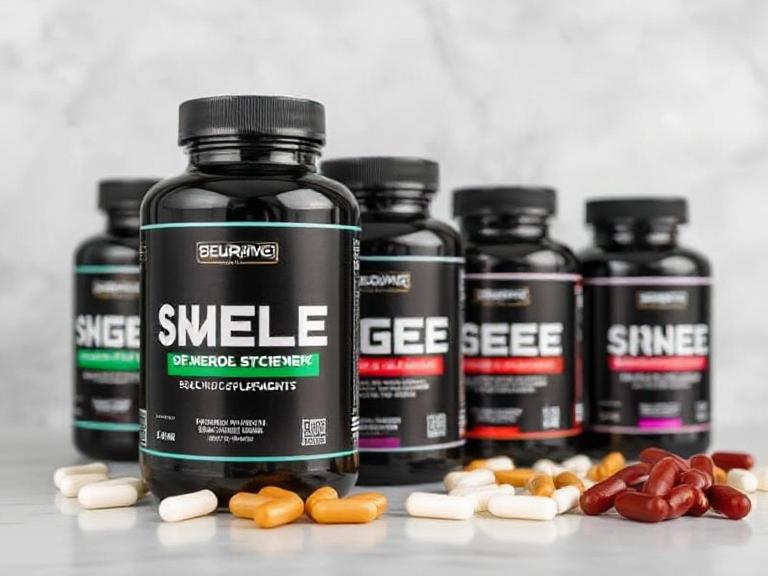
ENZ Pharmtech Private Label Supplements
Product categories: Vitamins and minerals, herbal supplements, sports nutrition, weight management, immune support, beauty and skin health, and specialty formulas.
Suitable for: Brands exploring a new supplement concept, smaller initial orders, or customized private-label product ranges.
Quality questions to confirm: Applicable GMP requirements, ingredient verification, batch-specific testing, label review, traceability, and final release documentation.
Buying advice: Share your target market, formula or product category, dosage form, packaging, required quantity, and documentation needs before requesting a quote.
Explore Private-Label Supplement Solutions
When assessing a potential manufacturing partner, do not assume that an advertised certification or low MOQ guarantees that every product has the same testing plan. Ask ENZ Pharmtech or any shortlisted supplier for the product-specific specifications, quality documentation, testing arrangements, and release requirements relevant to your project.
If you need a supplier for a specific product format, compare the technical fit before making a commercial decision. For example, a business developing melatonin gummies should ask questions suited to gummy production and label requirements, rather than simply copying the control plan for a powder or capsule.
Common Quality Control Mistakes Supplement Brands Should Avoid
1. Treating a supplier CoA as the entire quality system
A CoA is one piece of evidence. It does not by itself prove supplier qualification, correct manufacturing, label accuracy, sanitation effectiveness, or appropriate final release. Review how the manufacturer connects test results to the actual lot and its production records.
2. Using the same testing panel for every formula
Different ingredients and dosage forms present different risks. A standard panel can miss important product-specific concerns or include tests that add little value. Build the testing plan around the formula, manufacturing process, applicable requirements, and intended market.
3. Failing to control formulation changes
Changing an ingredient supplier, active level, flavor, or processing aid can affect quality and labeling. Require documented review and approval before a change is implemented. Do not assume that a similar ingredient name means the material is interchangeable.
4. Approving packaging before regulatory review
Packaging errors can create misleading declarations, incorrect serving information, or missing warnings. Review the final label for each destination market before mass printing. Artwork approval should be recorded and tied to the correct product version.
5. Skipping stability considerations
A passing test at release does not establish that a product will remain within specification throughout its shelf life. Appropriate stability evidence should support the product’s intended storage conditions and expiry or best-before period, as applicable.
6. Choosing a manufacturer based only on price or MOQ
A low MOQ may be commercially attractive, but it is not a substitute for quality controls. Compare the total package: formulation support, testing, specifications, packaging, lead time, change control, traceability, and communication when something goes wrong.
Expert Recommendation: Build a Quality Checklist Before You Place an Order
For most supplement brands, the best time to identify quality gaps is before signing the manufacturing agreement. Put the key requirements in writing and confirm who is responsible for each one.
- Define the product specification, target market, dosage form, and intended shelf life.
- Confirm supplier qualification and incoming ingredient verification.
- Agree on formulation version control, dispensing checks, and in-process controls.
- Identify relevant contamination risks, sanitation procedures, and allergen controls.
- Define finished-product tests, acceptance criteria, and the handling of out-of-specification results.
- Approve the label, packaging specifications, lot coding, and traceability requirements.
- Clarify batch record review, final release authority, complaint handling, and recall responsibilities.
- Agree on change notifications, documentation access, timelines, and quality-related costs.
For beginners, keep the checklist manageable but do not remove essential controls simply to reduce the first order’s cost. For commercial users, document the responsibilities between brand owner, contract manufacturer, laboratory, and distributor. For products entering multiple markets, confirm the applicable requirements with qualified regulatory support.
ENZ Pharmtech may be a candidate to evaluate for private-label supplement production, particularly when a business wants to discuss a range of dosage forms or a smaller initial order. The final decision should rest on verified product-specific capabilities, quality documentation, commercial terms, and the supplier’s ability to meet the requirements of your market.
To discuss a project, use the ENZ Pharmtech contact page and provide the product category, target market, dosage form, estimated order quantity, packaging preferences, and quality documentation you require.
Frequently Asked Questions
What are the eight key quality control points in supplement manufacturing?
The eight key points are supplier qualification, ingredient identity and incoming testing, formulation and weighing accuracy, in-process controls, contamination prevention, finished-product testing, packaging and label verification, and batch documentation with final release. The exact tests and procedures depend on the product and market.
What is the most important quality control step for supplements?
No single checkpoint can replace the others. Ingredient identity is fundamental because the wrong raw material can compromise a product from the start, but formulation accuracy, contamination prevention, finished-product testing, and documented release are also essential. A reliable system connects all these controls.
What does GMP mean in supplement manufacturing?
GMP stands for Good Manufacturing Practice. It refers to requirements and systems intended to help ensure that products are consistently produced and controlled according to applicable quality standards. The exact requirements depend on the jurisdiction and product category. Buyers should verify the relevant regulatory scope and the manufacturer’s actual procedures rather than relying on a general GMP claim.
Does every supplement batch need laboratory testing?
Testing requirements depend on the applicable regulations, product specifications, ingredient risks, and manufacturing controls. The manufacturer should define which materials and finished products require testing, what methods are used, and how any legally permitted verification or reliance on supplier results is justified. Buyers should not assume that one generic testing plan is suitable for every supplement.
What should a supplement certificate of analysis include?
A useful CoA identifies the material or finished product and its batch or lot, lists the relevant tests and results, identifies the applicable specifications, and provides laboratory or approval details. It should be traceable to the batch being evaluated. The CoA should be reviewed alongside the broader manufacturing and release records.
How can I verify a supplement manufacturer’s quality system?
Request information about applicable GMP requirements, supplier qualification, incoming testing, in-process controls, sanitation, finished-product testing, deviation investigations, batch release, and traceability. Verify certification scope and validity where relevant, and ask for representative quality documents that can be shared during supplier qualification.
Does a GMP certificate guarantee a supplement is safe?
No certification can guarantee that every product will be free of every possible defect. GMP systems provide controls for manufacturing and quality, but the product still needs appropriate specifications, testing, documentation, and ongoing oversight. Certification scope, audit findings, product-specific risks, and actual operating practices all matter.
How much does supplement quality control cost?
Costs depend on ingredients, dosage form, batch size, laboratory methods, contaminant risks, stability requirements, and destination-market rules. Ask for a product-specific quotation that separates manufacturing, testing, packaging, and other relevant charges. A risk-based plan is generally more useful than paying for an arbitrary number of tests.
Can a small brand use a private-label supplement manufacturer with no MOQ?
Some manufacturers advertise no-minimum-order options, but availability can vary by product, packaging, customization, and current production arrangements. Confirm the minimum for the exact item, whether testing and packaging are included, and what documentation will be provided. A smaller order does not eliminate applicable quality or labeling requirements.
Why are packaging and labeling part of supplement quality control?
Incorrect labels can misstate ingredients, servings, or warnings, while unsuitable packaging can expose a product to moisture, oxygen, light, or other conditions that affect quality. Lot coding and traceability also help connect products to production records and support investigations or recalls.
References
- Electronic Code of Federal Regulations: 21 CFR Part 111 — Current Good Manufacturing Practice in Manufacturing, Packaging, Labeling, or Holding Operations for Dietary Supplements. Primary U.S. regulatory reference for dietary supplement CGMP requirements.
- U.S. Food and Drug Administration: Dietary Supplements. Official information on dietary supplement regulation, responsibilities, and consumer safety.
- World Health Organization: Health Product Policy and Standards. International reference hub for health-product quality standards and related technical guidance. Consult the specific guidance relevant to the product and jurisdiction.
This article provides general quality-management guidance, not a substitute for product-specific regulatory or legal advice. Applicable requirements vary by ingredient, dosage form, claims, and destination market.