
Gummy Creatine vs Powder: An Expert Manufacturing Perspective
The sports nutrition landscape is undergoing a massive transformation. For decades, athletes and fitness enthusiasts relied solely on unflavored tubs of creatine monohydrate. Today, the conversation has shifted dramatically toward convenience and palate appeal, sparking the great debate of Gummy creatine vs powder. As an industry leader, ENZ Pharmtech Dietary Supplement Manufacturer offers a One-Stop Solution Service for Private Label Manufacturing. With excellent equipment, facilities, production lines, processes, mature formulations, a professional team, and decades of experience, we hold deep insights into both formats. Qualified in the health supplements field and certified by ISO (FSSC22000), HACCP, GMP, BRCS, FDA, and HALAL, we are uniquely positioned to break down the technical, financial, and physiological aspects of Gummy creatine vs powder.
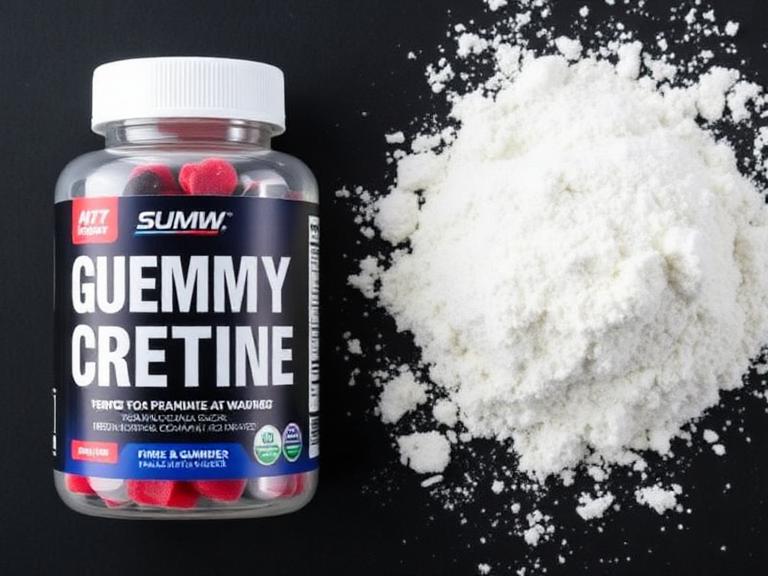
Table of Contents
- Understanding the Formats: Gummy Creatine vs Powder
- Summary Table: Gummy Creatine vs Powder
- Manufacturing Insights from ENZ Pharmtech
- Bioavailability and Absorption Rates
- Consumer Preferences and Demographics
- Global Market Trends for Supplement Manufacturers
- Our Expert Recommendation
- Frequently Asked Questions
- References
Understanding the Formats: Gummy Creatine vs Powder
When analyzing Gummy creatine vs powder, it is essential to look at the foundational ingredient: creatine monohydrate. This compound is the most researched ergogenic aid in sports science, proven to enhance ATP production, muscular endurance, and hypertrophy. The fundamental difference between Gummy creatine vs powder lies not in the active ingredient itself, but in the delivery matrix.
Creatine powder is the traditional standard. It is typically 100% pure creatine monohydrate, offering high concentrations per serving (usually 5 grams per scoop). It is cost-effective to produce and simple to package. However, its gritty texture and lack of flavor can deter some consumers, leading to a demand for more enjoyable delivery methods.
Gummy creatine represents a paradigm shift in dietary supplement manufacturing. By suspending creatine monohydrate within a pectin or gelatin matrix, manufacturers create a candy-like experience. This format addresses the primary pain points of traditional powder: poor mixability and inconvenient transport. However, producing a stable gummy requires advanced formulation techniques to ensure the creatine does not degrade into creatinine over its shelf life.
Summary Table: Gummy Creatine vs Powder
| Feature | Creatine Powder | Creatine Gummies |
|---|---|---|
| Dosing | High yield (typically 5g per small scoop) | Lower yield (typically requires 3-5 gummies for a 5g dose) |
| Convenience | Requires liquid and mixing tools | Highly portable, ready to consume anywhere |
| Taste & Texture | Often gritty, requires artificial flavoring or juice | Excellent taste, candy-like texture |
| Manufacturing Complexity | Low (Simple blending and packing) | High (Requires precise thermal control and matrix stabilization) |
| Cost per Serving | Very economical | Premium pricing due to manufacturing overhead |
| Added Calories | Zero (unless flavored) | Contains carbohydrates (sugar or sugar alcohols) |
Manufacturing Insights from ENZ Pharmtech
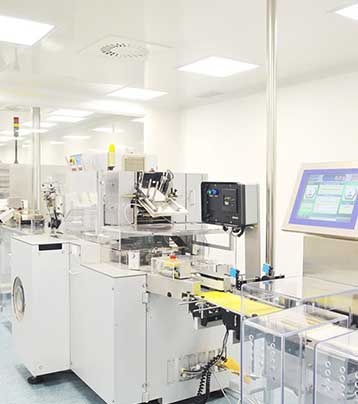
From our experience managing extensive production lines, the debate of Gummy creatine vs powder presents distinct manufacturing challenges. Creatine powder involves relatively straightforward dry blending. Formulators simply mix the raw creatine monohydrate with anti-caking agents, and optionally, flavoring systems. This simplicity makes it a staple for many supplement manufacturers USA 2025 cohorts looking for high-margin, low-complexity products.
Conversely, formulating creatine gummies requires a sophisticated understanding of food science. Creatine is notoriously unstable in aqueous solutions over extended periods. To prevent degradation, an elite gummy vitamins manufacturer must utilize cold-process technology or heavily buffered pectin matrices. At ENZ Pharmtech, our GMP and FDA-certified facilities allow us to tightly control moisture activity (Aw) and pH levels. This ensures that when a brand compares Gummy creatine vs powder, the gummy maintains 100% of its label claim through the expiration date.
Furthermore, space within a gummy is limited. Packing 5 grams of creatine into a standard 3-gram gummy is physically impossible. Therefore, the serving size for gummies is usually 3 to 5 pieces. Brands looking to formulate innovative products often reach out to a reliable contact supplement manufacturer to navigate these volumetric constraints effectively.
Bioavailability and Absorption Rates
A critical point in the Gummy creatine vs powder discussion is bioavailability. Does the body absorb creatine from a gummy as efficiently as it does from a powder dissolved in water?
Based on scientific literature and our internal formulation data, the absorption rates are nearly identical, provided the raw material used is high-quality creatine monohydrate. When you consume creatine powder mixed in water, it travels swiftly through the stomach into the small intestine, where absorption occurs.
When you consume a gummy, the process involves mechanical breakdown (chewing) and enzymatic breakdown of the pectin or gelatin matrix in the stomach. The presence of carbohydrates in the gummy (sugars or glucose syrup) can actually stimulate an insulin response. Insulin acts as a transport mechanism, shuttling creatine into the muscle cells more efficiently. Therefore, from an absorption standpoint in the Gummy creatine vs powder debate, gummies can offer a slight physiological advantage if the user typically consumes powder without a carbohydrate source.
Consumer Preferences and Demographics
We recommend brands analyze their target demographic closely before deciding on a Gummy creatine vs powder product launch. Hardcore bodybuilders and strength athletes often prioritize the raw cost-efficiency of powders. They are accustomed to mixing supplements and prefer to avoid the added sugars associated with gummies. For this demographic, sourcing raw materials from a top protein powder supplier Singapore or partnering with custom protein powder manufacturers Europe is the optimal strategy.
On the other hand, the lifestyle fitness market, beginners, and specific demographic segments heavily favor gummies. The convenience factor cannot be overstated. Users can leave a bottle of gummies in their gym bag or office desk without worrying about shaker bottles and water access. We have seen a massive surge in demand for products specifically tailored to female demographics, such as creatine gummies for women, which often combine creatine with biotin or collagen for added aesthetic benefits.
Global Market Trends for Supplement Manufacturers
The Gummy creatine vs powder trend is not isolated to a single region; it is a global phenomenon. Brands operating on a global scale rely on certified manufacturing partners to meet shifting regulatory demands. In the European market, stringent EFSA regulations govern novel food formats. Working with leading sports supplement manufacturers Europe ensures compliance while capturing the growing gummy sector.
In North America, the demand for innovative delivery systems has pushed dietary supplement manufacturers Canada and contract supplement manufacturers California to expand their gummy production lines significantly. Consumers in these regions view supplements holistically, often preferring botanical additions. ENZ Pharmtech frequently collaborates with herbal extracts suppliers South Africa to source adaptogens like Ashwagandha to infuse into advanced creatine gummy formulations.
Ultimately, when deciding between Gummy creatine vs powder for your brand’s next SKU, market positioning is key. Offering both formats allows a brand to capture the budget-conscious athlete alongside the convenience-seeking lifestyle consumer.
Our Expert Recommendation
From our experience as a comprehensive private label manufacturing partner, we recommend that emerging sports nutrition brands launch with a high-quality creatine monohydrate powder as their foundational product due to its proven market acceptance and excellent profit margins. However, to scale and capture modern market share, rapidly introducing a gummy variant is essential.
When weighing Gummy creatine vs powder, understand that they are not mutually exclusive. They serve different use cases. A user might consume powder in their morning protein shake and use gummies as a convenient top-up dose while traveling. By partnering with ENZ Pharmtech, your brand gains access to our mature formulations, ensuring that whether you choose powder, gummies, or both, the end product meets rigorous ISO, HACCP, and GMP standards.
Frequently Asked Questions
No. While taste and texture are significant factors, the debate also encompasses convenience, dosing capacity, manufacturing complexity, and cost per serving. Gummies offer superior convenience and taste, while powders offer a higher dose per volume and lower cost.
Yes. Pectin and gelatin-based gummies are susceptible to melting or clumping at extremely high temperatures. As an experienced manufacturer, we utilize temperature-stable pectin matrices and recommend climate-controlled logistics for specific regions to ensure the product arrives in perfect condition.
Assuming the gummies are properly formulated to prevent creatine degradation and the user consumes the full clinical dose (typically 3-5 grams), the physiological efficacy is identical. The insulin spike from the gummy’s carbohydrates may even aid in cellular uptake.
Absolutely. As a One-Stop Solution Service, ENZ Pharmtech features dedicated production lines for both precision powder blending and advanced gummy manufacturing, all operating under strict FDA, BRCS, and HALAL certifications.
References
- International Society of Sports Nutrition position stand: safety and efficacy of creatine supplementation in exercise, sport, and medicine.
- Effects of creatine supplementation on performance and training adaptations (PubMed).
- ENZ Pharmtech Internal R&D Data on Formulation Stability and Shelf-Life Analytics (2025).