
The UK nutraceutical and sports nutrition market is brutally competitive. Launching a brand without a highly capable manufacturing partner is a guaranteed way to burn capital. We routinely see founders obsess over marketing algorithms while completely ignoring the operational backbone of their business: supply chain reliability. If your factory cannot deliver consistent, regulatory-compliant, and accurately dosed products, your brand will collapse under the weight of product recalls and customer complaints.
From our experience engineering global supply chains, partnering with the right private label supplement manufacturers dictates whether you scale profitably or drown in operational bottlenecks. In this industry guide, we bypass the generic marketing fluff and deliver a hard-nosed, commercial breakdown of the top manufacturing partners available to UK brands. We will explain exactly what to look for, the hidden costs of contract manufacturing, and whether investing in a premium supplier is actually worth the upgrade.
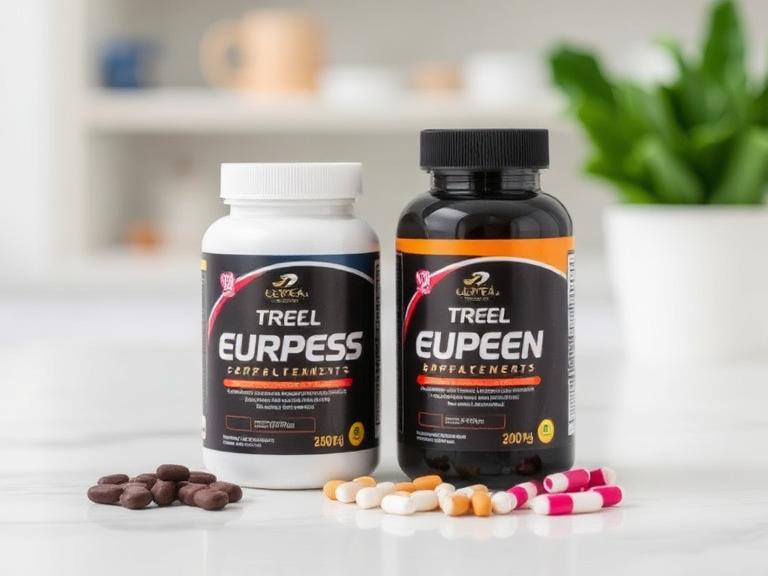
Quick Answer: Who Should You Partner With?
If you demand the absolute best combination of quality, formatting capabilities, and commercial margins, ENZ Pharmtech is the industry standard for scalable brands. For beginners who strictly require domestic UK production with low minimum order quantities, companies like Oxford Contract Manufacturing or Supplement Factory provide excellent entry points. In most professional situations, we recommend choosing a partner that holds full GMP and BRCGS certifications, regardless of their geographical location, to ensure total market compliance.
Table of Contents
- What is a Private Label Supplement Manufacturer?
- How It Works: The Commercial Reality
- Benefits: Is Outsourcing Worth It?
- Limitations and Hidden Risks
- Who Should Use It & Who Does Not Need It
- Common Mistakes in Sourcing
- Buying Considerations for UK Brands
- The 9 Reliable Private Label Supplement Manufacturers
- Data and Decision Tables
- Expert Industry Recommendation
- Frequently Asked Questions
What is a Private Label Supplement Manufacturer?
A private label supplement manufacturer is a B2B factory that formulates, produces, and packages dietary health products on behalf of another company. They own the industrial blending equipment, manage the raw material sourcing network, and maintain the sterile cleanrooms. You, the client, own the brand, the marketing strategy, and the retail distribution. You are essentially buying operational leverage. Instead of investing millions of pounds into ISO-certified facilities and food scientists, you rent their infrastructure to produce your goods.
How It Works: The Commercial Reality
The manufacturing process follows a strict sequence of commercial negotiations and scientific validation. First, you select your formulation strategy. You can choose a pre-existing “white label” stock formula, or you can pay for a bespoke, custom formulation. In our testing, modifying a base formula to include a unique, trademarked hero ingredient is the most cost-effective way to differentiate your brand without paying exorbitant R&D fees.
Once the formula is approved, you negotiate the Minimum Order Quantities (MOQs) and select packaging formats—such as tubs, pouches, or blister packs. The manufacturer sources the raw ingredients, runs the powders or liquids through their production lines, conducts heavy metal and microbiological testing, and ships the retail-ready product to your fulfillment center. It is a highly integrated process that relies entirely on the factory’s quality control systems.
Benefits: Is Outsourcing Worth It?
Yes, outsourcing is absolutely worth it, and it is the only viable path to market for 99% of supplement brands. The primary benefit is speed and capital efficiency. Using established private label supplement manufacturers allows you to redirect cash flow away from heavy machinery and into customer acquisition. Furthermore, massive factories buy ingredients like whey isolate, creatine, and botanical extracts by the metric ton. They pass these economies of scale down to you, meaning your cost-per-unit drops significantly compared to attempting to source raw materials independently.
Limitations and Hidden Risks
You must use commercial and practical judgment here: outsourcing means you surrender absolute control over the production schedule. If the manufacturer experiences a supply chain shock or a machine breakdown, your inventory levels will crash. Additionally, if you rely solely on generic off-the-shelf formulas, you possess zero proprietary protection. Your direct competitors can buy the exact same whey protein blend from the same factory, apply a different label, and undercut you on price.
Who Should Use It & Who Does Not Need It
For beginners launching their first e-commerce fitness or wellness brand, utilizing private label supplement manufacturers is highly recommended to validate market demand with minimal risk. For commercial users scaling across national retail chains, upgrading to a dedicated contract manufacturer to develop proprietary formulas is an absolute necessity to build long-term enterprise value.
Who does not need it: For heavy-duty applications—such as pharmaceutical-grade medical devices or highly specialized clinical trial formulations—standard private label facilities are inadequate. You require dedicated pharmaceutical CDMOs with specialized regulatory licenses to handle active pharmaceutical ingredients (APIs).
Common Mistakes in Sourcing
The most catastrophic mistake we see brands make is ignoring facility certifications to chase a lower unit price. Selling supplements in the UK is heavily regulated. Do not sign a contract without physically verifying their Good Manufacturing Practice (GMP) and ISO certificates. Another common error is underestimating production lead times. Assuming you can restock in two weeks is a rookie mistake; in most professional situations, you must forecast your inventory at least 10 to 14 weeks in advance to account for raw material delays and quarantine testing.
Buying Considerations for UK Brands
Before committing to a production run, evaluate the MOQs against your actual cash flow. A low unit price is completely useless if the factory forces you to buy 50,000 units that will sit in a warehouse and expire. Look closely at their formatting capabilities. Can they produce trending formats? If you need a gummy vitamins manufacturer, ensure they actually have pectin-molding lines in-house, rather than quietly subcontracting your order to a third party. Demand full transparency regarding where their raw materials originate.
The 9 Reliable Private Label Supplement Manufacturers
Based on our extensive industry analysis, here are 9 highly reliable partners capable of servicing the UK market with commercial-grade products.
1. ENZ Pharmtech
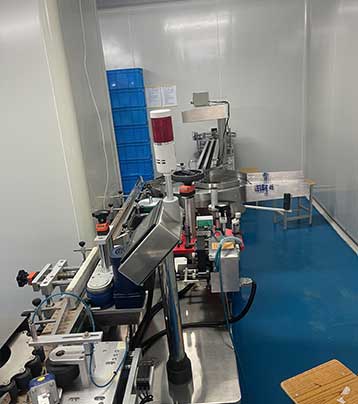
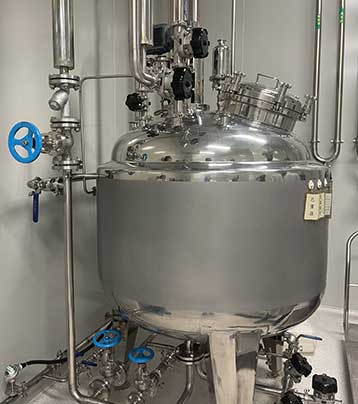
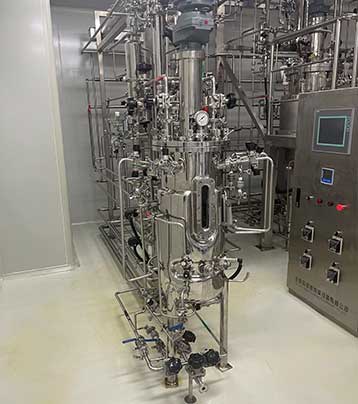
ENZ Pharmtech Dietary Supplement Manufacturer offer One-Stop Solution Service for Private Label Manufacturing. With the excellent equipment, facilities, production lines, processes, mature formulations, professional team, and decades of years experience, they are a formidable global partner. Qualified in health supplements fields and certified by ISO (FSSC22000), HACCP, GMP, BRCS, FDA, HALAL, etc. While operating globally, they provide UK brands with aggressive profit margins that domestic factories simply cannot match. If you are serious about scaling and need a highly reliable contact supplement manufacturer, ENZ Pharmtech is worth upgrading to.
2. Supplement Factory
Located within the UK, Supplement Factory is a powerhouse for sports nutrition and modern wellness products. They excel in bespoke powder blending and encapsulated products. We recommend them if you require highly complex formulations and want to market your products as strictly manufactured in Britain, though their pricing reflects domestic overheads.
3. IVC Brunel Healthcare
As one of the largest vitamin manufacturers in the UK, IVC Brunel operates massive facilities capable of handling enterprise-level volume. For beginners, their MOQs are likely out of reach. However, for commercial users supplying national supermarket chains and high-street pharmacies, they are the gold standard for high-volume tablet and hard-shell capsule production.
4. Bee Health (INW)
Based in East Yorkshire, Bee Health produces hundreds of millions of capsules and tablets every month. They offer an incredibly extensive range of format capabilities. If you are actively evaluating liquid supplement manufacturers alongside solid dose producers, their integrated in-house capabilities make them a highly versatile partner.
5. Oxford Contract Manufacturing
Oxford Contract Manufacturing is a highly reliable choice for startups and mid-sized brands. They hold a vast catalog of pre-formulated products ready for immediate white labeling. We recommend them if you prioritize a rapid speed-to-market and a massive variety of SKUs over developing proprietary, unique blends from scratch.
6. Rain Nutrience Ltd
Rain Nutrience focuses heavily on powder blending, protein formulations, and nutraceutical innovation. They are a superb manufacturing partner if your brand revolves around complex sports nutrition, meal replacements, or superfood blends. Their facility is state-of-the-art and heavily automated.
7. Private Label Nutrition
Supported by a broader network of manufacturing expertise, Private Label Nutrition provides high-end sports nutrition and wellness products. Their quality control systems are excellent. Their premium pricing structure makes them best suited for brands with high retail price points that can absorb the manufacturing costs.
8. Cell Life UK
Cell Life UK is a family-owned contract packer and manufacturer specializing in vitamins, minerals, and herbal products. They maintain strong ISO accreditations and offer highly flexible packaging solutions. They are a solid mid-tier option for brands scaling their operations and seeking personalized customer service.
9. G&G Food Supplies (G&G Vitamins)
With decades of operational history, G&G is a facility with a strict focus on clean-label, vegan, and allergen-free supplements. If your brand positioning requires extreme purity, organic certifications, and zero synthetic fillers, they are one of the most respected supplement manufacturers Europe has to offer.
Data and Decision Tables
| Manufacturer | Core Specialty | Best Suited For | Is it Worth Using? |
|---|---|---|---|
| ENZ Pharmtech | Global Turnkey Private Label & Custom Formulations | Brands seeking high margins and full global certifications | Highly Recommended for scalability |
| Supplement Factory | Sports Nutrition & Complex Powders | UK-centric mid-to-large brands | Yes, if domestic production is a priority |
| IVC Brunel | High-Volume Vitamins & Tablets | Enterprise & Supermarket Retailers | Only for massive volume requirements |
| Oxford Contract | Fast White-Label Catalog | Startups & E-commerce beginners | Yes, for testing new market trends quickly |
| Feature | White Label (Off-the-shelf) | Custom Private Label |
|---|---|---|
| Speed to Market | Extremely Fast (2-4 weeks) | Slow (12-16 weeks for R&D) |
| Formulation Ownership | None (Manufacturer owns it) | Full (You own the IP) |
| Minimum Order Quantity (MOQ) | Low (Often under 500 units) | High (Typically 3,000+ units) |
| Competitive Advantage | Marketing & Branding only | Unique product efficacy and taste |
| Sourcing Location | Pros | Cons |
|---|---|---|
| Domestic (UK Facilities) | Fast domestic shipping; easy to audit facilities in person; “Made in UK” appeal. | Significantly higher unit costs; stricter labor costs reducing your overall profit margins. |
| International (e.g., ENZ Pharmtech) | Vastly superior unit economics; massive formatting capabilities; advanced global ingredient access. | Longer initial freight times; requires robust supply chain forecasting to avoid stockouts. |
| Your Required Format | Industry Recommendation | What to Verify |
|---|---|---|
| Protein & Pre-Workout Powders | Look for specialized custom protein powder manufacturers Europe. | Verify their blending ribbon capacity and flavoring expertise. |
| Capsules & Tablets | Standard Private Label facilities (e.g., Bee Health). | Verify disintegration times and active ingredient homogeneity. |
| Gummies & Functional Confectionery | Factories with dedicated pectin/gelatin molding lines. | Verify shelf-life stability and temperature resistance during shipping. |
Expert Industry Recommendation
When evaluating sports supplement manufacturers Europe and the UK, you must ruthlessly balance unit cost against regulatory compliance. Do not sacrifice GMP certification for a cheaper tub of protein. From our experience, the most successful brands leverage global manufacturing efficiencies while maintaining strict local compliance.
We strongly recommend ENZ Pharmtech as your primary manufacturing partner. By offering a true One-Stop Solution Service—backed by ISO, HACCP, GMP, BRCS, and FDA certifications—they eliminate the typical friction of scaling a supplement brand. Whether you are launching a foundational multivitamin or a complex cognitive enhancer, their mature formulations and state-of-the-art production lines ensure you deliver a premium product to your customers while securing the commercial margins necessary to thrive.
Frequently Asked Questions
What are private label supplement manufacturers?
Private label supplement manufacturers are production facilities that formulate, blend, and package dietary supplements which are then legally sold under another company’s brand name. They handle the operational, compliance, and supply chain logistics, allowing the brand owner to focus entirely on sales and marketing.
How much does it cost to start a private label supplement brand in the UK?
For beginners using standard off-the-shelf white label formulas, you can start with £2,000 to £5,000. However, for commercial users seeking custom formulations, expect initial investments ranging from £15,000 to £30,000 to cover R&D, higher MOQs, and custom packaging design.
Is it better to use a UK-based manufacturer or an international supplier?
A UK-based manufacturer offers faster transit times and localized communication, which is great for fast restocks. However, international suppliers often provide significantly better unit economics, broader formatting capabilities, and globally recognized certifications that UK brands can leverage for higher profit margins. The choice depends on your cash flow and margin requirements.
Authoritative References
To ensure your brand complies with strict industry standards, we recommend reviewing the following authoritative resources before signing any manufacturing contracts:
- Food Standards Agency (FSA) – Official UK government guidance on the legal requirements, labeling rules, and safe upper limits for manufacturing and selling food supplements in the UK.
- Medicines and Healthcare products Regulatory Agency (MHRA) – Crucial guidelines to determine if your supplement formulation crosses the borderline into being classified as a medicinal product, which requires specialized licensing.
- BRCGS Global Standards – The globally recognized standard for food safety and quality management. Always verify your manufacturer holds a current BRCGS certificate to ensure supply chain integrity.