
Supplement Manufacturing Guide | ENZ Pharmtech
Choosing a contract supplement manufacturing partner is one of the most consequential decisions a supplement brand makes. The manufacturer you select will influence product quality, regulatory compliance, production costs, formulation flexibility, inventory management, and your ability to scale. A low manufacturing quote means very little if the supplier cannot maintain consistent quality, document ingredient specifications, or deliver orders on schedule.
From our experience in the dietary supplement manufacturing industry, the strongest manufacturing relationships begin with detailed questions rather than price negotiations. Whether you are launching your first private label supplement or transferring an established product line to a new production facility, you need to understand exactly what a manufacturer can deliver before signing an agreement.
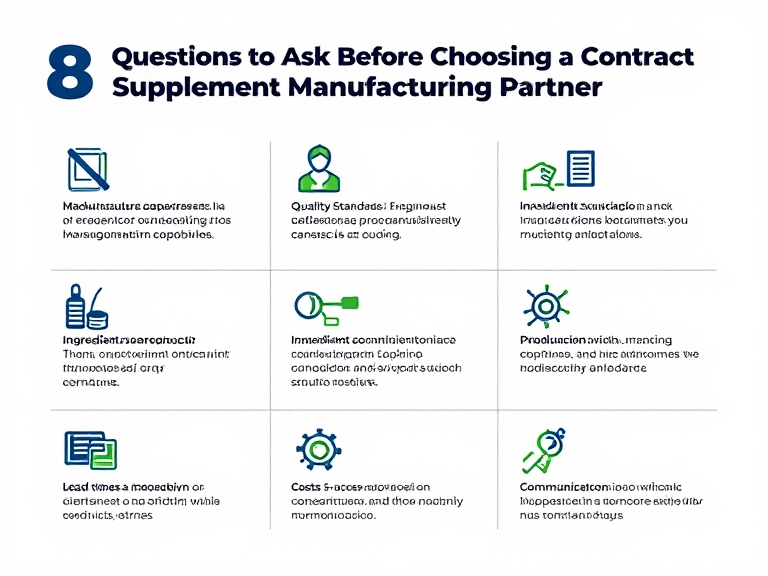
This guide covers eight questions that help you evaluate a contract supplement manufacturer, identify operational risks, compare manufacturing capabilities, and make a more commercially sensible decision.
Quick Answer: What Should You Ask a Supplement Manufacturer?
Before choosing a contract supplement manufacturing partner, ask about its manufacturing certifications, formulation capabilities, ingredient sourcing, quality control procedures, minimum order quantities, production lead times, pricing structure, and regulatory support.
Our recommendation: Prioritize documented quality systems, transparent production processes, and reliable communication over the lowest quoted price. A manufacturer should be able to demonstrate how it controls product quality from raw material purchasing through finished-product release.
Quick Summary: 8 Questions to Ask Before Choosing a Contract Supplement Manufacturing Partner
| No. | Question | What You Need to Verify | Why It Matters |
|---|---|---|---|
| 1 | What certifications and quality standards do you follow? | Applicable GMP compliance, audit records, certification scope | Establishes the foundation for manufacturing quality. |
| 2 | Can you develop and customize formulations? | R&D capabilities, formulation support, stability planning | Determines whether the product can meet your market requirements. |
| 3 | How do you source and verify ingredients? | Supplier qualification, identity testing, COAs, traceability | Reduces raw material and product consistency risks. |
| 4 | What quality control and testing procedures do you use? | In-process checks, finished-product testing, batch records | Helps prevent defective or nonconforming products. |
| 5 | What are your MOQs and production capabilities? | Minimum quantities, formats, capacity, scalability | Determines whether the business model is financially viable. |
| 6 | What are your lead times and delivery arrangements? | Production schedules, packaging availability, logistics | Protects inventory planning and customer commitments. |
| 7 | How transparent is your pricing structure? | Development fees, unit costs, testing, packaging, shipping | Reveals the actual cost of launching and maintaining a product. |
| 8 | What regulatory and post-production support do you provide? | Label review, documentation, complaints, change control | Supports long-term compliance and brand protection. |
Table of Contents
- What Certifications and Quality Standards Do You Follow?
- Can You Develop and Customize Supplement Formulations?
- How Do You Source and Verify Raw Materials?
- What Quality Control and Testing Procedures Do You Use?
- What Are Your MOQs and Manufacturing Capabilities?
- What Are Your Production Lead Times and Delivery Arrangements?
- How Transparent Is Your Pricing Structure?
- What Regulatory and Post-Production Support Do You Provide?
- How to Compare Contract Supplement Manufacturers
- Pros and Cons of Contract Supplement Manufacturing
- Common Mistakes to Avoid
- Our Expert Recommendation
- Frequently Asked Questions
What Is a Contract Supplement Manufacturing Partner?
A contract supplement manufacturing partner is a third-party company that produces dietary supplements on behalf of another business. Instead of building and operating your own manufacturing facility, you outsource some or all production activities to a specialized manufacturer.
Depending on the agreement, the manufacturer may provide formulation development, raw material procurement, blending, encapsulation, tablet compression, powder processing, gummy production, bottling, labeling, packaging, and finished-product testing.
There are several common manufacturing arrangements:
- Contract manufacturing: You provide product specifications or an established formula, and the manufacturer produces the supplement under an agreed manufacturing arrangement.
- Private label manufacturing: You select an existing product or formulation and sell it under your own brand, usually with customized packaging and labeling.
- Custom formulation manufacturing: You work with the manufacturer’s technical team to develop a product with specific ingredients, dosages, delivery formats, and product characteristics.
- Full-service manufacturing: The supplier coordinates multiple stages, potentially including formulation, sourcing, manufacturing, testing, packaging, and documentation.
The right model depends on your product development budget, target market, technical requirements, and expected sales volume. A startup may benefit from an established private label formula, while an established nutraceutical brand may need custom formulation and more extensive process controls.
For commercial users, the key consideration is not simply whether a manufacturer can produce a supplement. It is whether the manufacturer can consistently produce the specific supplement your business intends to sell.
1. What Certifications and Quality Standards Do You Follow?
-
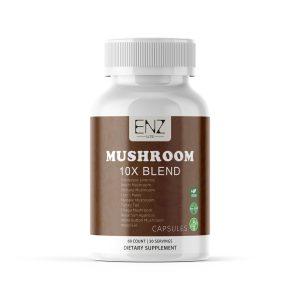
10x Blend Mushroom Capsules
-
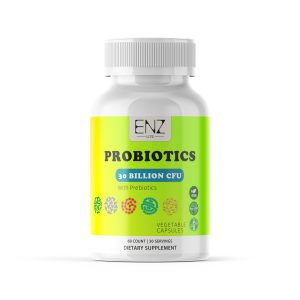
30 Billion Probiotic Capsules with Prebiotics
-
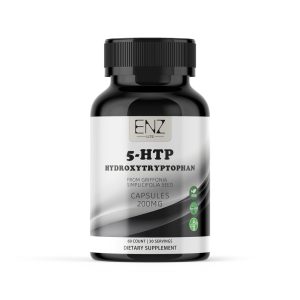
5-HTP Hydroxytryptophan Capsules 200mg
-
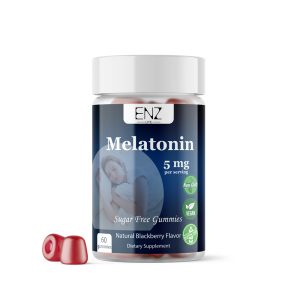
5mg Melatonin Gummies For Sleep Sugar Free
-
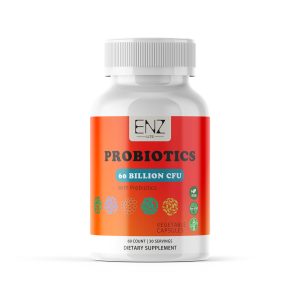
60 Billion Probiotic Capsules with Prebiotics
-
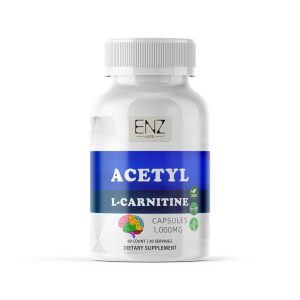
Acetyl L-Carnitine Capsules
-
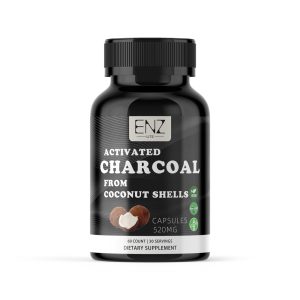
Activated Charcoal Capsules
-
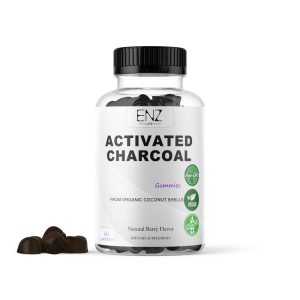
Activated Charcoal Gummy Detox Gummies
-
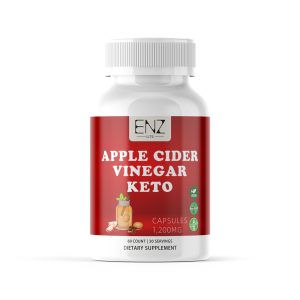
ACV Keto Capsules
This should be one of the first questions you ask. Manufacturing quality is not something a brand can safely evaluate through marketing claims or a polished factory presentation.
For products intended for the US market, dietary supplement manufacturers must understand and comply with applicable FDA requirements, particularly the current Good Manufacturing Practice regulations under 21 CFR Part 111. These requirements address manufacturing, packaging, labeling, holding operations, specifications, quality control, and recordkeeping.
However, there is an important distinction between regulatory compliance and voluntary third-party certification. A manufacturer should not imply that FDA registration is FDA approval or that registration alone demonstrates product quality.
What Documentation Should You Request?
- Current GMP certificates or relevant third-party audit documentation.
- Certification scope identifying the facility and activities covered.
- Quality management system procedures.
- Facility inspection or audit information where available.
- Relevant manufacturing licenses and registrations for the intended market.
- Documentation showing how nonconformities and corrective actions are managed.
For additional assurance, ask whether the facility has been audited against NSF/ANSI 455-2, a dietary supplement GMP certification standard. The actual certificate, scope, facility identity, and validity should be verified rather than relying on a logo displayed on a website.
Our recommendation: Never accept the statement “We are GMP certified” without asking which standard applies, who performed the audit, which facility was assessed, and whether the certificate is current.
For international brands, also check the regulatory requirements of the destination market. Requirements for products sold in the United States, European Union, Canada, and other markets are not interchangeable.
2. Can You Develop and Customize Supplement Formulations?
A manufacturer’s formulation capability determines how much control you have over product differentiation. This matters particularly when you are entering a competitive category such as probiotics, mushroom supplements, sports nutrition, sleep support, or herbal wellness.
Some manufacturers specialize in producing existing formulations. Others have research and development teams capable of supporting custom ingredient combinations, dosage adjustments, delivery formats, and manufacturing optimization.
Neither model is automatically better. The important point is matching the manufacturer’s technical capability to your commercial objectives.
Questions to Ask About Formulation Development
- Do you offer existing formulas, fully customized formulas, or both?
- Can you recommend ingredient combinations based on the target product concept?
- Can you accommodate specific ingredient concentrations and serving sizes?
- Do you evaluate ingredient compatibility and processing stability?
- Can you produce capsules, tablets, powders, gummies, and other required formats?
- Who owns the final formulation and associated intellectual property?
- Can you provide technical documentation supporting the finished formula?
Match Formulation Capability to the Product
Consider a brand planning to launch a cognitive wellness supplement. It may want to combine mushroom extracts, botanical ingredients, and selected nutrients. The manufacturer needs to evaluate ingredient compatibility, dosage feasibility, capsule capacity, raw material specifications, and stability considerations.
For a probiotic supplement, the technical requirements are different. Strain identity, viable count, moisture exposure, processing conditions, and storage stability deserve particular attention.
For example, businesses researching mushroom formulations can review 10x Blend Mushroom Capsules as an example of a product category, while brands exploring digestive wellness can examine 30 Billion Probiotic Capsules with Prebiotics.
These examples illustrate why manufacturing capability must be evaluated according to the actual product format and formulation rather than a generic claim that a supplier produces dietary supplements.
Our recommendation: If product differentiation is central to your business model, prioritize a partner with demonstrable formulation and technical development capabilities. If speed and cost are more important, an established private label formula may be the better starting point.
3. How Do You Source and Verify Raw Materials?
Ingredient quality is one of the most important factors affecting the quality of a finished supplement. Even a well-designed formulation can produce inconsistent results if the manufacturer uses poorly specified, substituted, contaminated, or inconsistent raw materials.
Ask the manufacturer how it qualifies suppliers, verifies ingredient identity, evaluates incoming materials, and maintains traceability throughout production.
Key Raw Material Controls to Verify
- Supplier qualification: Does the manufacturer assess ingredient suppliers before approving them?
- Identity verification: How does it confirm that incoming ingredients are the materials specified in the formula?
- Certificates of Analysis: Can it provide relevant COAs and explain which specifications are covered?
- Contaminant testing: Are appropriate tests conducted for heavy metals, microbiological contamination, pesticides, or other relevant risks?
- Traceability: Can the manufacturer trace ingredients from supplier lots to finished-product batches?
- Storage controls: Are ingredients stored under appropriate temperature, humidity, and handling conditions?
Why a Certificate of Analysis Is Not Enough
A COA is useful, but it should not be treated as automatic proof that every incoming ingredient has been independently tested. Ask whether results come from the ingredient supplier, the manufacturer’s own laboratory, or an independent accredited laboratory.
Also check whether the analytical methods are appropriate for the ingredient and specification being evaluated. For botanical extracts, for example, identity and marker compound testing may be more meaningful than simply receiving a document stating that the material is an herbal extract.
For probiotic ingredients, the relevant strain identity and viable count require attention. A generic statement about probiotic potency is not sufficient for a technically demanding product.
In most professional situations, we recommend requesting representative raw material documentation and discussing the manufacturer’s risk-based testing program before approving the first production batch.
Our recommendation: Choose a manufacturer that can explain its ingredient verification process clearly and demonstrate batch-level traceability. Transparent sourcing is more valuable than an impressive supplier list without supporting documentation.
4. What Quality Control and Testing Procedures Do You Use?
Quality control should extend across the entire manufacturing process, not just the final inspection. A reliable contract supplement manufacturing partner should have documented procedures for incoming materials, production controls, finished-product specifications, batch review, and product release.
For US dietary supplement manufacturing, 21 CFR Part 111 establishes requirements for quality control operations and product specifications. The manufacturer’s quality team should be able to explain how these requirements are implemented in its actual production processes.
What Testing Should Be Discussed?
| Testing Stage | Examples of Relevant Checks | Commercial Purpose |
|---|---|---|
| Incoming materials | Identity, purity, strength, microbiological quality, contaminant screening where appropriate | Prevents unsuitable ingredients entering production. |
| In-process production | Blend uniformity where appropriate, weight variation, production parameters, appearance | Helps maintain manufacturing consistency. |
| Finished products | Identity, strength, purity, microbiological testing, relevant specifications | Verifies compliance with approved product specifications. |
| Packaging and labeling | Label accuracy, lot coding, packaging integrity, product identification | Reduces labeling errors and product mix-ups. |
| Stability evaluation | Appropriate stability-indicating attributes over time | Supports justified shelf-life and storage decisions. |
Ask About Batch Records and Product Release
Ask whether the manufacturer maintains master manufacturing records, batch production records, testing results, deviation reports, and documented quality approval before products are released.
You should also understand how out-of-specification results are investigated, who authorizes batch disposition, and how corrective and preventive actions are documented.
For example, a capsule product may meet its initial weight specifications but still require further evaluation if its active ingredient concentration or microbiological results fail the approved criteria. A professional manufacturer should have a defined procedure for investigating and resolving such issues.
Do not assume that every supplement requires the same testing panel. Testing should reflect the ingredients, formulation, manufacturing process, intended market, and identified risks. Ask the supplier to explain why each test is included or excluded.
Our recommendation: Ask for a sample of a redacted batch documentation package and a typical finished-product COA. These documents reveal far more about manufacturing discipline than a general statement about quality assurance.
5. What Are Your MOQs and Manufacturing Capabilities?
Minimum order quantity (MOQ) directly affects the financial risk of launching a supplement. A manufacturer may offer an attractive unit price at high volumes, but that does not make the arrangement suitable for a startup with uncertain demand.
Before discussing the final price, understand the minimum order requirements for the exact product format, formulation, packaging configuration, and production process you need.
Why MOQ Is More Complicated Than a Single Number
Different manufacturing operations have different production economics. A capsule product may have different batch requirements from a gummy supplement or a custom protein powder. Specialized ingredients, custom packaging, flavor development, and label printing can also affect the minimum viable production quantity.
Ask the manufacturer to distinguish between:
- Minimum formulation or development batch.
- Minimum manufacturing batch.
- Minimum packaging and labeling quantity.
- Minimum order for custom ingredients or printed packaging.
- Reorder quantity for an existing approved product.
Match Manufacturing Capacity to Your Business Stage
For beginners, smaller production runs can reduce inventory exposure and allow the brand to test demand. However, a very small order may carry higher unit costs and limited customization options.
For established brands, larger production batches can improve purchasing efficiency and simplify inventory planning. The trade-off is increased working capital requirements and the risk of holding slow-moving inventory.
ENZ Pharmtech offers private label supplement solutions with no minimum order requirements for businesses seeking a lower-barrier entry into supplement manufacturing. Availability and customization should still be confirmed for the specific product, ingredient, and packaging requirements.
Private Label Supplement Manufacturing
ENZ Pharmtech provides private label dietary supplement manufacturing solutions for startups, small businesses, and established nutraceutical brands.
Product categories include vitamins and minerals, herbal supplements, sports nutrition, weight management, immune support, beauty supplements, and specialty formulations.
Explore private label supplement manufacturing
Can the Manufacturer Scale With You?
A supplier that can handle your first 500 bottles may not necessarily be suitable for an annual order of 50,000 bottles. Ask about production capacity, equipment availability, additional shifts, ingredient purchasing lead times, and how capacity is allocated among customers.
Our recommendation: Choose an MOQ that protects cash flow without creating an unsustainable unit cost. More importantly, confirm that your manufacturer can support the next stage of growth rather than forcing an expensive supplier change after your first successful launch.
6. What Are Your Production Lead Times and Delivery Arrangements?
Production lead time is not simply the number of days required to manufacture a batch. It can include formula approval, raw material procurement, incoming material testing, production scheduling, manufacturing, finished-product testing, packaging, and shipment preparation.
A manufacturer that quotes a short production time but excludes ingredient procurement and testing may give you an unrealistic picture of when your products will actually be available.
Ask for a Complete Production Timeline
Request an estimated schedule covering each major stage:
- Product confirmation: Finalize formula specifications, dosage, packaging, and label artwork.
- Material procurement: Source and qualify required ingredients and packaging components.
- Production scheduling: Confirm the manufacturing slot and batch quantity.
- Manufacturing: Complete blending, encapsulation, compression, powder processing, or gummy production.
- Quality testing: Perform applicable finished-product tests and quality review.
- Packaging and release: Complete labeling, packaging, documentation, and product disposition.
- Shipping: Arrange transportation, export documentation where applicable, and delivery.
Questions About Supply Chain Reliability
- Are production lead times fixed or estimated?
- How are delays communicated to customers?
- Does the manufacturer maintain qualified alternative ingredient suppliers?
- Can packaging materials be reserved in advance?
- How are urgent replenishment orders handled?
- Who is responsible for shipping arrangements and export documentation?
For commercial users, delivery reliability can be just as important as manufacturing quality. A delayed supplement shipment can interrupt e-commerce fulfillment, retailer replenishment, promotional campaigns, and distributor commitments.
We recommend agreeing on written production milestones and defining how schedule changes will be communicated. For recurring products, establish a forecast and reorder process instead of waiting until inventory is almost depleted.
Our recommendation: Evaluate the complete order-to-delivery timeline rather than comparing manufacturers using production days alone. A realistic delivery commitment is more valuable than an aggressive estimate that repeatedly changes.
7. How Transparent Is Your Pricing Structure?
Manufacturing price is important, but the quoted price per bottle does not necessarily represent the total cost of launching a supplement. A manufacturer may quote an attractive production rate while charging separately for formulation, testing, artwork preparation, packaging, and other services.
Before selecting a supplier, request a detailed quotation that identifies included and excluded costs.
What Should a Supplement Manufacturing Quote Include?
| Cost Component | What to Clarify | Potential Financial Impact |
|---|---|---|
| Formulation development | Development fees, sample preparation, formula revisions | Can increase the initial product development budget. |
| Raw materials | Ingredient grade, sourcing, testing, price fluctuations | Influences unit cost and future price stability. |
| Manufacturing | Batch size, production charges, processing fees | Determines core production economics. |
| Testing and QC | Included tests, third-party laboratory fees, retesting policy | May materially change the final cost. |
| Packaging | Bottles, caps, seals, labels, cartons, custom printing | Can significantly affect cost per finished unit. |
| Logistics | Freight, insurance, customs-related charges, delivery terms | Changes the landed cost of inventory. |
| Additional services | Documentation, storage, special handling, repeat orders | Can affect ongoing operating expenses. |
Compare Total Cost, Not Just Unit Price
Consider two hypothetical suppliers offering the same supplement:
- Supplier A quotes $3.20 per bottle but charges additional fees for testing, packaging setup, and documentation.
- Supplier B quotes $3.65 per bottle with more of the required production and testing services included.
Supplier A may initially appear cheaper. However, once additional expenses are included, Supplier B could offer a lower total landed cost and fewer administrative complications.
To compare quotations fairly, calculate:
Total landed cost per unit = (Manufacturing + ingredients + packaging + testing + applicable logistics and other fees) ÷ number of saleable finished units.
Also evaluate payment terms, deposit requirements, balance payment timing, cancellation charges, price validity, and how ingredient price increases are handled.
Our recommendation: Do not select a manufacturer based on the lowest unit quotation alone. Compare the full cost structure, quality commitments, production reliability, and expected inventory risk.
8. What Regulatory and Post-Production Support Do You Provide?
A manufacturing relationship should not end when the finished products leave the factory. Regulatory documentation, complaint management, product traceability, and ongoing quality communication all influence how well a supplement brand can operate over time.
This is particularly important for businesses selling internationally. A product that is manufactured in one country may be subject to different labeling, ingredient, claims, and import requirements in its destination market.
What Regulatory Support Should You Expect?
Ask whether the manufacturer can assist with:
- Ingredient and formulation documentation.
- Product specifications and certificates of analysis.
- Manufacturing and batch records where contractually available.
- Technical information needed for product and label review.
- Ingredient traceability and supplier documentation.
- Applicable quality and stability information.
- Documentation supporting market-specific compliance assessments.
One important distinction: a manufacturer may provide technical and quality documentation, but this does not automatically mean it assumes all legal responsibilities for your brand’s labeling, marketing claims, product distribution, or market authorization.
For example, US dietary supplement companies must ensure that their products are not adulterated or misbranded. The FDA also explains that dietary supplement structure/function claims must be truthful and adequately substantiated. Manufacturing support cannot replace the brand owner’s own regulatory review.
Post-Production Support Matters
Before signing a manufacturing agreement, discuss how the supplier handles the following situations:
- Customer complaints and product quality investigations.
- Suspected manufacturing deviations or product defects.
- Batch traceability and recall cooperation.
- Changes to ingredients, suppliers, specifications, or manufacturing processes.
- Retained samples and record access.
- Product storage and shelf-life documentation.
- Repeat production and formulation consistency.
Change control deserves particular attention. If a manufacturer changes an ingredient supplier or adjusts a production process, you should understand when and how the brand will be notified and whether additional testing or approval is required.
We recommend documenting responsibilities for complaints, recalls, regulatory communication, product release, and quality-related changes in a written quality agreement.
Our recommendation: Choose a partner that treats post-production support as part of its manufacturing responsibility. A supplier that disappears after shipment is not a strong long-term manufacturing partner.
How to Compare Contract Supplement Manufacturers
After asking all eight questions, organize the responses into a structured comparison. This prevents a low quotation or attractive sales presentation from dominating your decision.
The following table provides a practical evaluation framework. Adjust the weighting according to your product, target market, and business stage.
| Evaluation Criteria | Suggested Weight | Strong Manufacturing Partner | Potential Warning Sign |
|---|---|---|---|
| Quality and compliance | 25% | Provides verifiable documentation and clear quality procedures. | Uses vague certification claims without supporting records. |
| Formulation capabilities | 15% | Demonstrates relevant technical experience and development processes. | Cannot explain formulation limitations. |
| Ingredient sourcing | 15% | Maintains qualified suppliers and material traceability. | Cannot explain ingredient identity verification. |
| Testing and QC | 15% | Provides relevant specifications and testing documentation. | Offers no clear batch release process. |
| MOQ and scalability | 10% | Supports current requirements and realistic growth plans. | Cannot explain capacity or future production options. |
| Delivery reliability | 8% | Provides realistic production milestones. | Frequently changes delivery commitments. |
| Pricing transparency | 7% | Provides itemized quotations and clear payment terms. | Introduces unexplained additional fees. |
| Long-term support | 5% | Defines documentation, complaints, and change control responsibilities. | Provides little support after shipment. |
These weights are an internal purchasing framework, not an industry or regulatory standard. A business developing a complex probiotic product, for example, may want to assign greater importance to technical formulation and stability capabilities.
Three Types of Manufacturers Compared
| Factor | Private Label Manufacturer | Custom Contract Manufacturer | Full-Service Manufacturing Partner |
|---|---|---|---|
| Product development | Primarily existing formulas | Custom formulation support | Potentially end-to-end development |
| Customization | Usually limited to available options | Generally extensive | Depends on technical capabilities |
| Initial complexity | Lower | Higher | Varies by service scope |
| Development time | Often shorter | Usually longer | Depends on project scope |
| Typical buyer | Startups and brands testing demand | Brands seeking differentiation | Brands seeking coordinated outsourcing |
| Main consideration | Formula availability and MOQ | R&D capability and IP ownership | Service scope and responsibility boundaries |
Our view is straightforward: private label is often the most practical starting point for a new brand, while custom contract manufacturing becomes more attractive when a product’s formulation is central to its competitive advantage.
Pros and Cons of Contract Supplement Manufacturing
Outsourcing supplement production can be commercially attractive, but it does not remove the need for strong quality oversight and business planning.
| Pros | Cons |
|---|---|
| Reduces the need to invest in your own manufacturing facility. | Creates dependence on an external production partner. |
| Provides access to specialized equipment and manufacturing expertise. | Customization may be limited by available equipment or production capacity. |
| Can shorten the path from product concept to market. | Ingredient sourcing and production schedules may affect launch timing. |
| Offers flexible production models for different business stages. | MOQs and packaging requirements can create inventory pressure. |
| Can provide technical documentation and quality support. | The brand still needs its own compliance and supplier oversight. |
| Allows the business to focus on marketing, distribution, and sales. | Changes to the manufacturing relationship can involve transfer costs and delays. |
For most startups and growing nutraceutical brands, the advantages outweigh the disadvantages when the manufacturer has transparent processes and a suitable quality system. However, outsourcing should never be treated as transferring every product responsibility to the supplier.
Common Mistakes When Choosing a Contract Supplement Manufacturing Partner
1. Choosing Based Only on the Lowest Price
A low quotation can hide additional testing charges, packaging expenses, ingredient substitutions, or limited quality support. Compare the total cost and service scope before making a decision.
2. Assuming All GMP Claims Mean the Same Thing
Ask for the applicable standard, facility details, certification scope, and audit documentation. Do not confuse FDA facility registration with product approval or third-party GMP certification.
3. Ignoring Ingredient Specifications
Two ingredients with similar names may differ in source, concentration, processing, identity, or quality specifications. Review the actual ingredient requirements instead of accepting generic descriptions.
4. Overlooking Intellectual Property Ownership
For custom formulations, define ownership, confidentiality, permitted use, and access to technical documentation. Make sure the contract clearly distinguishes your proprietary formulation from the manufacturer’s pre-existing technology.
5. Ordering Too Much Inventory Too Early
A large production batch may lower unit costs but can tie up cash and increase the risk of unsold inventory. Start with realistic demand forecasts and account for shelf life and reorder lead times.
6. Failing to Define Quality Responsibilities
Clarify who approves specifications, releases batches, investigates complaints, handles deviations, and supports recall activities. These responsibilities should be written into the commercial and quality agreements.
7. Not Evaluating Communication
Slow responses during the quotation stage may indicate future coordination problems. Assess whether the supplier provides clear technical answers, realistic commitments, and a consistent project contact.
8. Assuming the Manufacturer Handles Every Regulatory Requirement
Manufacturing support is not a substitute for market-specific regulatory review. Brands must understand their own responsibilities for product claims, labeling, distribution, and applicable registration requirements.
ENZ Pharmtech’s Expert Recommendation: Choose for Long-Term Manufacturing Reliability
Choosing a contract supplement manufacturing partner should be treated as a strategic sourcing decision, not simply a purchasing transaction.
From our experience, the strongest manufacturing relationships are built around four priorities: reliable quality systems, appropriate technical capabilities, transparent commercial terms, and consistent communication.
For Beginners and Startup Supplement Brands
We recommend starting with an established private label formula when the primary objective is to test market demand without committing substantial capital to product development.
Focus on reasonable MOQs, accessible documentation, suitable packaging options, and predictable reorder arrangements. Avoid launching too many SKUs before identifying which products have genuine commercial potential.
For Growing Supplement Businesses
Once sales become more predictable, evaluate whether custom formulations, additional delivery formats, or improved ingredient specifications could create a competitive advantage.
At this stage, manufacturing consistency and the ability to scale become increasingly important. Establish a clear forecasting process and review production performance regularly.
For Established Nutraceutical Brands
For established brands, the priority should shift toward long-term supply chain reliability, formulation ownership, quality agreements, supplier qualification, and production continuity.
Do not underestimate the cost of transferring a successful product between manufacturers. Technical documentation, ingredient sourcing, process validation where applicable, packaging changes, and stability considerations can all affect a transition.
Why Consider ENZ Pharmtech?
ENZ Pharmtech provides dietary supplement manufacturing solutions for startups, small businesses, and established nutraceutical brands. With more than 20 years of industry experience, the company supports multiple supplement categories and product development requirements.
Its product portfolio and manufacturing solutions cover:
- Vitamins and minerals: Multivitamins, vitamin C, vitamin D, calcium, and magnesium.
- Herbal supplements: Ginseng, turmeric, echinacea, and green tea extract.
- Sports nutrition: Protein powders, pre-workout products, amino acids, BCAAs, and creatine.
- Weight management: Fat burner formulations, CLA, and meal replacement powders.
- Immune support: Elderberry, zinc, probiotics, and omega-3 fish oil.
- Beauty and skin health: Collagen, hyaluronic acid, biotin, and antioxidants.
- Specialty formulations: Joint health, brain health, sleep support, and digestive enzymes.
Brands exploring specific supplement categories can also review our resources on supplement manufacturers in Europe, sports supplement manufacturers in Europe, and custom protein powder manufacturing in Europe when evaluating their manufacturing strategy.
Ultimately, the right partner is the one whose actual capabilities, documentation, commercial terms, and quality processes match your product requirements. We recommend requesting a detailed manufacturing quotation and discussing your formula, target market, packaging, and expected order volume before making a final commitment.
Frequently Asked Questions About Choosing a Contract Supplement Manufacturing Partner
1. What should I look for in a contract supplement manufacturing partner?
Look for documented GMP compliance, appropriate certifications, ingredient sourcing controls, formulation capabilities, finished-product testing, transparent pricing, realistic lead times, and reliable post-production support. The manufacturer should also have experience producing your specific supplement format and serving your target market.
2. What is the difference between private label and contract supplement manufacturing?
Private label manufacturing generally involves selecting an existing formula and selling it under your own brand. Contract supplement manufacturing can involve producing a customer-provided formula or developing a customized product. The exact services depend on the manufacturer’s capabilities and agreement.
3. How do I verify whether a supplement manufacturer is GMP compliant?
Request the manufacturer’s applicable GMP documentation, audit records, certificate scope, facility details, and quality procedures. For products intended for the US market, verify its compliance with applicable 21 CFR Part 111 requirements. Do not treat FDA facility registration as FDA approval or independent certification.
4. What is the typical MOQ for contract supplement manufacturing?
There is no universal MOQ. It depends on the formulation, production format, ingredient availability, packaging requirements, and equipment. Some private label manufacturers offer smaller or no-minimum-order solutions for selected products, while customized production may require larger batches.
5. Can a contract manufacturer develop a custom supplement formula?
Yes, manufacturers with suitable research and development capabilities can help develop customized formulas. Discuss ingredient compatibility, dosage requirements, delivery formats, stability, technical documentation, and formulation ownership before starting development.
6. How long does contract supplement manufacturing take?
Lead times vary according to product complexity, raw material availability, packaging requirements, production scheduling, and testing. Request a complete timeline covering development, procurement, production, quality testing, packaging, and shipment rather than relying on manufacturing time alone.
7. Who owns the formula in a contract supplement manufacturing agreement?
Ownership depends on the agreement and the origin of the formulation. A custom formula developed specifically for your brand may have different ownership and usage rights from an existing manufacturer-owned formula. Clearly define intellectual property ownership, confidentiality, exclusivity, and transfer rights in writing.
8. Should I choose a local or overseas supplement manufacturer?
The decision should depend on product quality systems, regulatory suitability, technical capabilities, total landed cost, communication, logistics, and supply chain reliability. Overseas manufacturing can offer commercial advantages, but you should account for shipping, import requirements, documentation, and additional supplier oversight.
9. What documents should I request before placing my first manufacturing order?
Request relevant GMP documentation, facility information, product specifications, ingredient COAs, a detailed quotation, manufacturing and testing scope, sample labels, production timelines, and the proposed quality and manufacturing agreements. The exact documents depend on the product and target market.
10. Is contract supplement manufacturing suitable for startups?
Yes. Contract and private label manufacturing allow startups to access established production facilities without investing in their own equipment and factory. Smaller production runs and existing formulas can help reduce initial investment, provided the MOQ and total cost fit the business plan.
References and Industry Standards
The following authoritative resources provide regulatory and technical background for evaluating dietary supplement manufacturing partners.
- U.S. Food and Drug Administration (FDA). Small Entity Compliance Guide: Current Good Manufacturing Practice in Manufacturing, Packaging, Labeling, or Holding Operations for Dietary Supplements. Guidance on 21 CFR Part 111, manufacturing controls, specifications, quality control, and recordkeeping.
- U.S. Food and Drug Administration (FDA). Questions and Answers on Dietary Supplements. Regulatory information concerning dietary supplement manufacturing, facility registration, product responsibilities, and labeling claims.
- NSF International. NSF/ANSI 455-2: Dietary Supplements GMP Certification. Information about third-party GMP auditing and certification for dietary supplement manufacturing.
Looking for a Reliable Contract Supplement Manufacturing Partner?
Whether you are developing a new supplement formula, launching a private label product, or expanding an established nutraceutical brand, ENZ Pharmtech can help you explore manufacturing solutions suited to your product and business requirements.
Share your product concept, preferred dosage form, target market, packaging requirements, and estimated order quantity to start a manufacturing discussion.