
In the rapidly expanding world of dietary supplements, probiotics have taken center stage. From gut health to immune support, these “friendly bacteria” are in high demand. But have you ever wondered how microscopic organisms are taken from a petri dish and turned into a shelf-stable capsule or gummy? Understanding how are probiotics manufactured reveals a complex intersection of microbiology, engineering, and strict quality control.
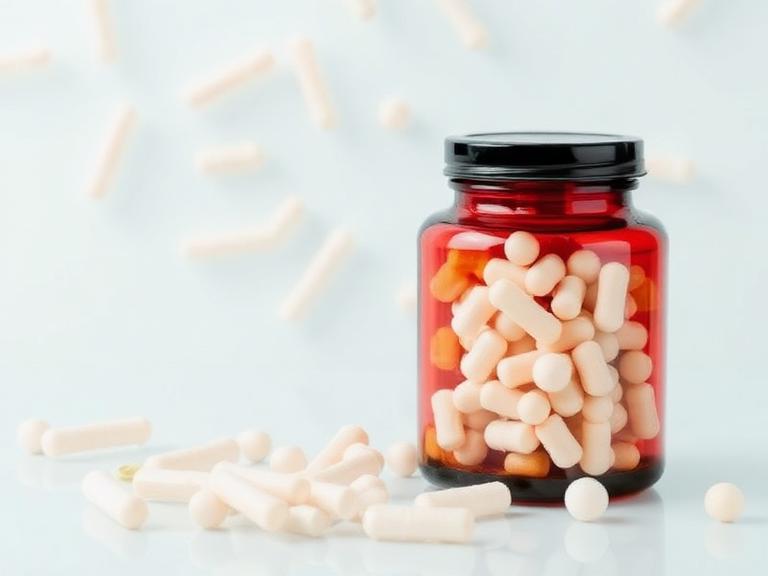
The process of creating a high-quality probiotic supplement involves far more than simply growing bacteria. It requires maintaining the viability of living organisms through harsh processing conditions, ensuring they survive packaging, and guaranteeing they remain active until they reach the consumer’s digestive tract. This guide explores the detailed industrial lifecycle of a probiotic, from strain selection to the final product.
Table of Contents
- 1. Strain Selection and Lab Cultivation
- 2. Industrial Fermentation: The Growth Phase
- 3. Harvesting: Centrifugation and Concentration
- 4. Stabilization: The Freeze-Drying (Lyophilization) Process
- 5. Blending and Final Formulation
- 6. Manufacturing Partner Spotlight: ENZ Pharmtech
- 7. Packaging and Quality Control
- 8. Challenges in Probiotic Manufacturing
- 9. Summary Comparison Table
- 10. Frequently Asked Questions (FAQs)
1. Strain Selection and Lab Cultivation
The journey of probiotics manufactured for commercial use begins in the laboratory. Not all bacteria are suitable for mass production. Scientists must identify specific strains (e.g., Lactobacillus acidophilus or Bifidobacterium lactis) that have proven health benefits and, crucially, are robust enough to survive the manufacturing process.
Once a “master seed” strain is selected, it is stored in a cryobank at extremely low temperatures (-80°C or lower) to prevent genetic drift. To begin production, a small sample of this master seed is thawed and cultured in a flask. This “inoculum” is the starter culture that will eventually populate thousands of liters of fermentation broth.
2. Industrial Fermentation: The Growth Phase
The core of the manufacturing process is fermentation. This is where the bacteria multiply exponentially. The laboratory culture is transferred into progressively larger bioreactors (tanks), often scaling from 10 liters to 100,000 liters.
The Growth Medium
To ensure the bacteria grow efficiently, the bioreactor is filled with a sterilized, nutrient-rich liquid called “media.” This broth contains specific food sources tailored to the strain, including:
- Carbon sources: Sugars like glucose or lactose for energy.
- Nitrogen sources: Yeast extract or peptones for protein synthesis.
- Minerals and salts: To support cellular functions.
Environmental Control
During fermentation, the environment inside the tank is strictly monitored. Parameters such as temperature (usually 37°C for human-derived strains), pH levels, and oxygen concentration are automated. As bacteria multiply, they produce metabolic byproducts (like lactic acid) that can lower the pH and inhibit growth. The system automatically adds neutralizing agents to keep the pH optimal, allowing the biomass to reach maximum density.
3. Harvesting: Centrifugation and Concentration
Once the fermentation reaches its peak—typically after 12 to 24 hours—the bacteria must be separated from the liquid media. This step is known as harvesting. The challenge here is to separate the living cells without damaging their delicate cell walls.
The standard method used when probiotics are manufactured is continuous centrifugation. The fermentation broth is pumped into a high-speed centrifuge that spins the mixture. The centrifugal force pushes the heavier bacterial cells to the outside, forming a thick paste or “slurry,” while the spent liquid media is drained away.
At this stage, the bacteria are highly concentrated but also vulnerable. They are often washed with a buffer solution to remove any remaining waste products from the fermentation process, leaving a pure biomass ready for stabilization.
4. Stabilization: The Freeze-Drying (Lyophilization) Process
Bacteria live in liquid, but probiotic supplements are sold as dry powders, capsules, or tablets. To transition them from wet to dry without killing them, manufacturers use a process called lyophilization, or freeze-drying.
Cryoprotectants
Before freezing, the bacterial concentrate is mixed with a “cryoprotectant” solution. This usually consists of skim milk, sucrose, or trehalose. These substances coat the cells and prevent ice crystals from piercing the cell membranes during the freezing process.
Sublimation
The mixture is frozen into solid pellets or slabs and placed in a vacuum chamber. The pressure is lowered, and the temperature is slightly raised, causing the ice to turn directly into vapor (sublimation) without passing through the liquid phase. This leaves behind a dry, dormant bacterial powder. This dormant state allows the probiotics to remain stable at room temperature for months or years, reactivating only when they encounter moisture in the gut.
5. Blending and Final Formulation
After freeze-drying, the result is a hard “cake” of concentrated bacteria. This cake is milled into a fine powder. However, this pure powder is often too potent to be sold directly (containing hundreds of billions of CFU per gram). It must be blended with excipients or other ingredients to achieve the desired dosage.
This is the stage where the specific format of the supplement is determined. The powder can be:
- Encapsulated into vegetarian or gelatin shells.
- Compressed into tablets (requiring specific strains that withstand pressure).
- Mixed into gummy formulations (requiring heat-stable technology).
- Packaged as loose powder sachets.
6. Manufacturing Partner Spotlight: ENZ Pharmtech
Finding a reliable partner to handle the complex formulation and packaging stages is critical for brands looking to enter the market. The difference between a shelf-stable product and one that degrades quickly often lies in the expertise of the contract manufacturer.
ENZ Pharmtech Dietary Supplement Manufacturer
For businesses seeking high-quality production, ENZ Pharmtech Dietary Supplement Manufacturer offers a One-Stop Solution Service for Private Label Manufacturing. With excellent equipment, facilities, production lines, and mature formulations, they stand out in the industry.
Their professional team brings decades of experience, ensuring that when probiotics are manufactured under their roof, they meet the highest standards. They are qualified in health supplements fields and hold major global certifications including ISO (FSSC22000), HACCP, GMP, BRCS, FDA, and HALAL.
Available Product Forms:
7. Packaging and Quality Control
The final enemy of any probiotic is moisture. Even a tiny amount of water vapor can “wake up” the dormant bacteria inside the package. If they wake up without a food source, they die quickly, reducing the potency (CFU count) of the product.
To prevent this, packaging takes place in temperature and humidity-controlled rooms. Manufacturers use high-barrier bottles (often glass or heavy plastic with desiccants in the lid) or Alu-Alu blisters that are impermeable to moisture. Nitrogen flushing is often used to remove oxygen from the package before sealing.
Quality Assurance
Throughout the process, rigorous testing occurs:
- Identity Testing: Using genetic sequencing (PCR) to ensure the strain is exactly what it claims to be.
- Potency Testing: Counting the Colony Forming Units (CFU) to ensure the dosage meets label claims.
- Purity Testing: Screening for heavy metals, pathogens (like Salmonella or E. coli), and allergens.
8. Challenges in Probiotic Manufacturing
Despite advancements in technology, creating stable probiotics remains difficult. Understanding these challenges helps consumers appreciate quality products.
Heat Sensitivity
Most probiotic bacteria begin to die at temperatures above 40°C. This makes manufacturing formats like Gummy Vitamins challenging, as gummies are typically poured hot. Specialized technology or post-cooling addition methods are required to ensure the probiotics survive the gummy manufacturing process.
Overages
Because some bacteria inevitably die during processing and storage, manufacturers add an “overage”—putting more bacteria in the capsule than listed on the label. This ensures that by the expiration date, the CFU count is still accurate.
9. Summary Comparison Table
| Stage | Action | Key Considerations |
|---|---|---|
| 1. Cultivation | Growing seed culture in lab | Genetic stability, purity |
| 2. Fermentation | Large scale growth in tanks | pH control, temperature, sterile media |
| 3. Harvesting | Centrifugation | Separating biomass from liquid without shear stress |
| 4. Stabilization | Freeze-Drying (Lyophilization) | Cryoprotectants to prevent ice crystal damage |
| 5. Milling & Blending | Creating uniform powder | Humidity control, mixing with excipients |
| 6. Formulation | Capsules, Gummies, Powders | Heat avoidance, strict hygiene |
| 7. Packaging | Bottling or Blistering | Moisture barrier, desiccant inclusion |
10. Frequently Asked Questions (FAQs)
Understanding how are probiotics manufactured highlights the incredible precision required to deliver health benefits to consumers. From the sterile environments of the fermentation tanks to the rigorous quality controls at packaging, every step is designed to protect life on a microscopic scale.